
Hendersonville officials weigh tighter street-parking rules to protect emergency access
Get AI-powered insights, summaries, and transcripts
Sign Up Free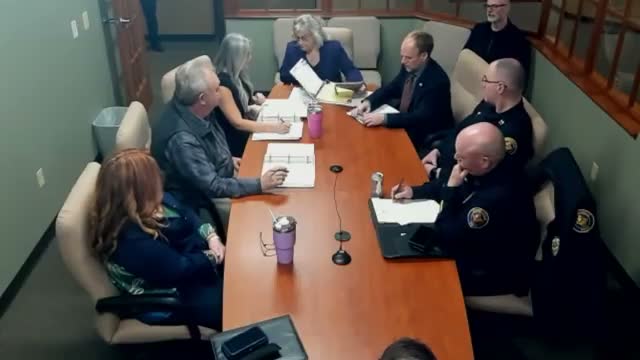
Summary
City leaders and public-safety officials discussed changing street-parking rules after fire and police leaders warned parked vehicles on narrow residential streets can prevent emergency vehicles from getting through; the council referred the matter to the traffic and parking committee for study.
HENDERSONVILLE — Hendersonville’s public-safety panel spent most of its Jan. 13 meeting debating whether to tighten street-parking rules after officials said parked cars on narrow residential streets can block fire trucks and slow emergency responses.
The meeting chair opened a discussion after staff handed out copies of the current parking code and photos of problem locations. “I’ve got 10 of them. This is our current code,” one staff member said while distributing the materials and asking the council to review possible revisions.
Why it matters: Fire and emergency officials said parked cars on both sides of older, narrower streets can make it nearly impossible for apparatus to pass. “My biggest issue, I want fire trucks to be able to get through,” the chair said, urging the group to identify problem areas and propose solutions that prioritize safety.
What officials said: Interim Fire Chief Edwards told the group that nighttime congestion is a particular concern because “people are more … home at night,” which increases cars on the roadway and reduces visibility and maneuvering room for crews. A fire official noted an engine’s body is about 8.5 feet wide and that mirror overhangs add roughly another 9.5 feet, a combination that can leave no clearance on streets where vehicles park on both sides.
Council members and staff discussed several possible approaches: removing the ordinance’s current 1 a.m. to 5 a.m. restriction and allowing a 24-hour restriction in targeted problem areas; posting one-side-only signage on specific streets; adding permanent no-parking signs on known narrow streets; or keeping limits but improving enforcement and public education. Several speakers warned that implementing one-side parking or 24-hour bans could provoke community resistance and would require clear signage and exceptions for temporary situations such as deliveries.
Data and safety context: One participant put the scale of related crashes in perspective, saying, “2,200 crashes in a year? I mean, I would say 15 of those might be somebody backing out,” to indicate backing-out incidents tied to driveway/curbside interactions are a small share of overall crashes, while emergent access remains the central safety concern.
Local examples and impacts: Officials identified specific trouble spots, including Durham Farm(s) subdivision and street names cited by residents, where parking on both sides has repeatedly hampered response. A Ward 5 council member said the ward has seen frequent complaints and that many subdivisions lack 'no parking' signs.
Next steps: Rather than change the ordinance at the meeting, the chair asked staff to combine input and send options to the traffic and parking committee for review. Staff indicated that a committee meeting to consider recommendations will likely occur within the next few months.
Procedural notes: The panel approved the Oct. 14 meeting minutes and accepted the meeting agenda by voice votes earlier in the session. No ordinance or resolution was adopted at the Jan. 13 meeting.
The traffic and parking committee will review staff and public-safety recommendations and return proposed ordinance language or signage plans to the public-safety panel for further action.