
Presenter says rising health and pharmacy claims are driving structural budget pressures; education accounts for about 62% of spending
Get AI-powered insights, summaries, and transcripts
Subscribe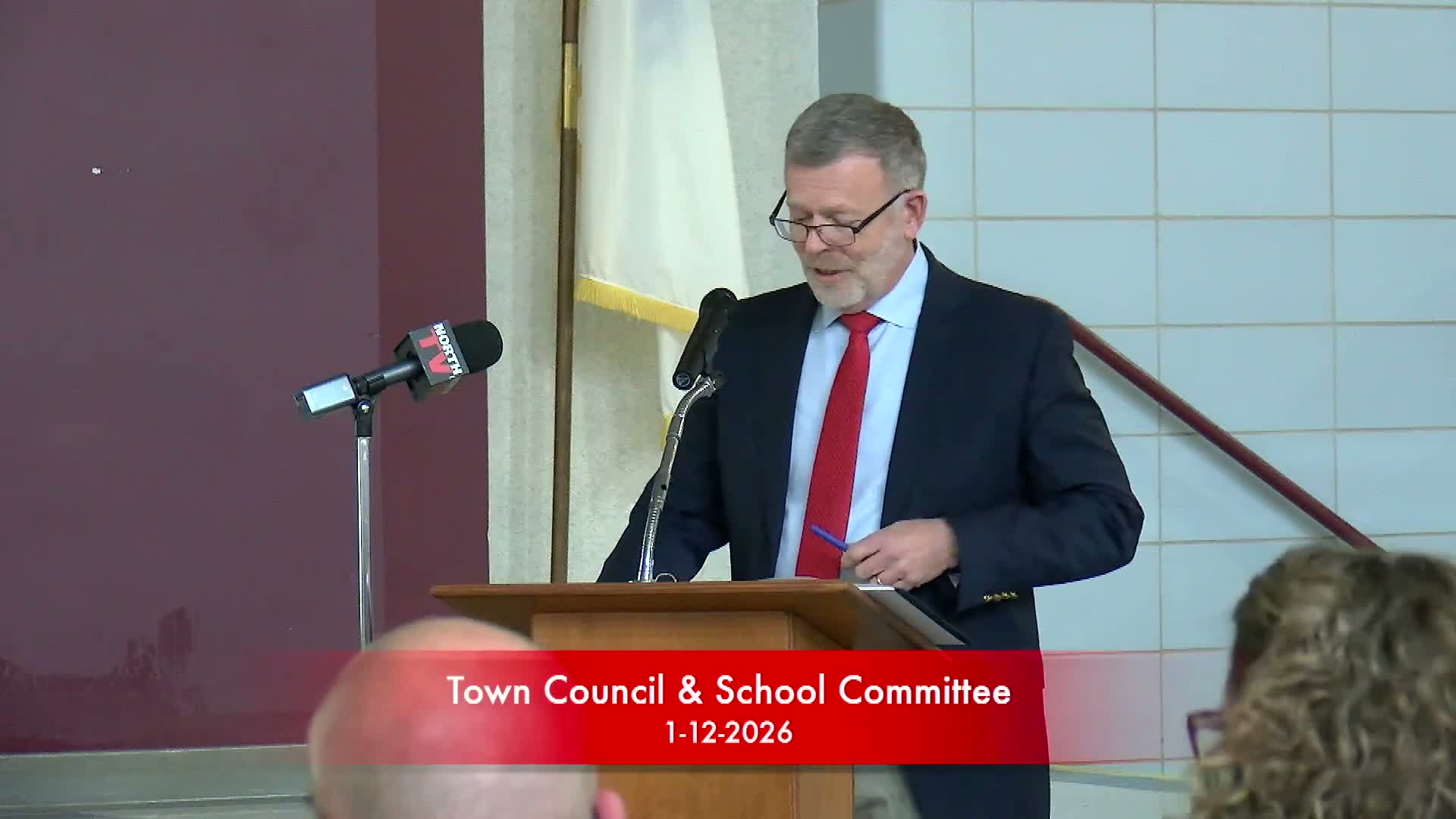
Summary
An unidentified presenter told residents that health insurance and pharmacy claims — including a recent GLP-1 cost spike — are creating structural cost pressures in the FY26 budget, and that when town-paid school costs are included education represents about 62% of total town spending.
Speaker 1, the meeting's presenter, told attendees the town's fiscal 2026 outlook is broadly within normal ranges but that health insurance is an outlier and a structural cost driver. "Health care remains different," Speaker 1 said, adding that recent claims volatility and pharmacy cost growth are straining the town's budget.
Speaker 1 said that in a typical presentation education appears to be just under 52% of total spending, but cautioned this view is incomplete. "When those costs are shown and accounted for where they belong, education represents approximately 62% of the town's total spending," Speaker 1 said, listing school debt service, health insurance, pension obligations, unemployment compensation, liability insurance and the cost of Tri County Regional Vocational High School as items the town pays on the school department's behalf.
The presenter provided several budget details: the FY26 budget included about $9.3 million in local receipts, and through November 2025 roughly $2.5 million (about 27%) had been collected. Claims pressure has increased: in recent months (August'October) total claims exceeded premium levels, with October reaching nearly 140% of premiums, Speaker 1 said. Through the first four months of FY26, 15 high-cost claimants each exceeded $50,000, totaling approximately $1.38 million — "these are not discretionary claims," Speaker 1 said, calling them necessary medical costs.
Pharmacy costs are an accelerating element of the trend. Speaker 1 said that between September and October a 30-day period GLP-1 medications increased costs by roughly $110,000, "driven by additional claimants and prescriptions." Combining medical and pharmacy, projected growth was described as approximately 11% on the low end, with pharmacy growing significantly faster than medical services. Speaker 1 emphasized the gap between those health cost trends and recurring revenues, saying health insurance costs are growing "2 to 3 times faster than the town's recurring revenues based on Proposition 2 1/2."
On capital, Speaker 1 said the town had received about $26.4 million in FY27 capital requests to date: roughly $13.1 million for tax-supported general fund projects and about $13.4 million in enterprise (water and sewer) projects funded by ratepayers. The town's FY27 general fund capital capacity was estimated at roughly $3.5 million (free cash estimated in the range of $350,000'$500,000 plus about $3.0 million in borrowing), meaning the town could realistically fund about 25% of submitted projects in a single year.
Speaker 1 also reported a general stabilization balance of about $8.1 million and said the appropriation for the North Attleboro retirement system (noted in the presentation) was approximately $6.08 million. The presenter closed by stressing the continued importance of the town's partnership with its schools in navigating upcoming fiscal choices.
No formal motions or votes were recorded in the provided transcript.