Get Full Government Meeting Transcripts, Videos, & Alerts Forever!
Get email alerts on the Evidentiary Exception topic
No spam. Unsubscribe anytime.
Prosecutors and public defenders clash over narrow evidentiary exception for private recordings
Summary
Baltimore City public defenders and the Maryland State's Attorneys Association debated a proposed evidentiary remedy that would allow certain privately made recordings into court while keeping Maryland’s two‑party consent rule; defenders warned of privacy erosion and entrapment, prosecutors described cases where recordings were the only evidence of serious crimes.
The House Judiciary Committee heard contrasting local perspectives on Nov. 18, 2025, about whether a judicially managed evidentiary remedy could allow privately made recordings into evidence in limited circumstances while preserving Maryland’s two‑party consent rule.
Marguerite Lanaux of the Baltimore City Office of the Public Defender told the committee that two‑party consent "guarantees greater privacy protection" and protects vulnerable people from fabricated, coerced or manipulative recordings. She warned that moving to a one‑party or broad exceptions regime could "encourage vigilante self help" and produce dueling sets of evidence and entrapment risks.
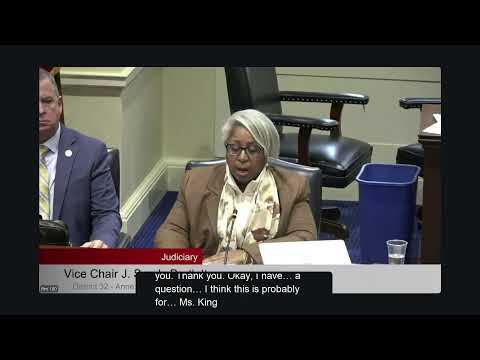
Joyce King, chief counsel at the Frederick County State's Attorney's Office representing the Maryland State's Attorneys Association, countered with a list of real cases where privately recorded audio was the sole or decisive evidence. King described examples including elder‑abuse recordings, recorded admissions in assault and attempted‑murder investigations and a child‑abuse in‑daycare recording that prosecutors could not admit under current law. She said prosecutors favor an "evidentiary rule remedy" that would allow judges to admit recordings in limited cases after weighing authenticity, probative value and the public interest.
Committee members asked whether exceptions would creep beyond crimes against persons, whether victims who record should receive immunity from prosecution, and whether civil liability exposure would remain an obstacle for victims. King said prosecutors routinely grant immunity to cooperating individuals in the cases she listed and the Maryland State's Attorneys Association supports reclassifying the wiretap violation from a felony to a misdemeanor. Lanaux cautioned that judicial discretion alone may not prevent misuse, and said protecting privacy norms remains critical.
Neither side proposed eliminating the two‑party consent right; both described targeted approaches—the public defender stressing strict limits and safeguards, the prosecutors seeking judicial pathways to admit key evidence in the interest of justice. The committee did not take votes and asked presenters for follow‑up materials on penalties, immunity practices and drafting options.