Get Full Government Meeting Transcripts, Videos, & Alerts Forever!
Get email alerts on the Committee Organization topic
No spam. Unsubscribe anytime.
House Environment and Transportation Committee opens 2026 session, outlines energy priority and subcommittee structure
Summary
The House Environment and Transportation Committee held an organizational meeting to open the 2026 session, introduced members and staff, set rules for hearings and votes, and named energy affordability and subcommittee assignments as immediate priorities.
The chair of the House Environment and Transportation Committee opened the panel's first meeting of the 2026 legislative session with organizational remarks, introduced members and staff, and set procedures for hearings, testimony and votes.
The chair told the committee that energy affordability will be a top priority this year while the panel also maintains responsibilities for transportation and environmental policy. "Affordability is at the top of that agenda," the chair said, adding the committee would pursue those goals while keeping sustainability in mind.
Members received a schedule of planned briefings and were asked to check the committee website for updates; staff will circulate topic documents after the meeting. The chair instructed members that witnesses may participate virtually but members must attend in person, and that witness sign-up remains two business days before a hearing. Sponsors are not timed in their testimony, but other witnesses will be timed according to House rules, the chair said.
The chair described subcommittee structure and duties: the environment subcommittee will function similarly to prior years; natural resources and open space will handle many of the same topics but agriculture and aquaculture have been carved out into a separate subcommittee; the transportation subcommittee will carry the bulk of bills; the energy subcommittee will handle generation and energy-specific utility bills; and the utilities subcommittee will cover Public Service Commission-regulated matters, including transportation network companies and certain water-utility issues.
Vice Chair Guyton said she would support the chair and the speaker's agenda to work on reducing energy costs while protecting the environment. "This isn't JPR. This is ENT or, environmental matters," she said, urging a collegial tone and joking that members should "think of bunny rabbits" when discussions heat up.
The chair reminded members that, because of the committee's new membership size, 11 votes are required to pass a bill and reviewed voting practices: committee votes usually occur toward the end of the week; voice votes are used where appropriate, with roll-call votes used as needed. Members were told to make substantive points before votes rather than at roll call.
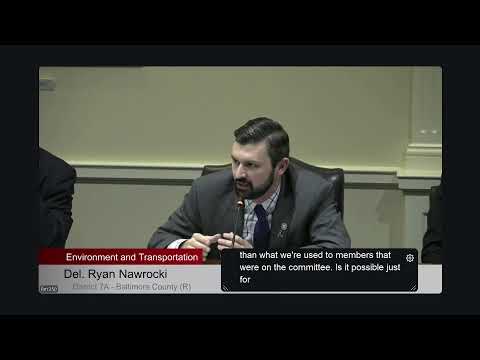
A member, Doug Nerocki, asked for a clear breakdown of subcommittee responsibilities; the chair walked through which topics would go to which subcommittee and encouraged members to use subcommittees for detailed work and to speak with subcommittee chairs about bills they want to advance.
Administrative notes included introductions of committee staff (including Trish Gagnon and clerks Rose Love and Dominic Gardini), committee counsel, a new trooper assigned to the committee, and a request that members contribute $75 for snacks and beverages in the staff kitchen.
The chair closed by welcoming newly appointed Delegate Odom to the committee and urging members to contact staff with questions. The committee will proceed with scheduled briefings and subcommittee assignments in the coming days.