Get Full Government Meeting Transcripts, Videos, & Alerts Forever!
Get email alerts on the Wiretapping Privacy topic
No spam. Unsubscribe anytime.
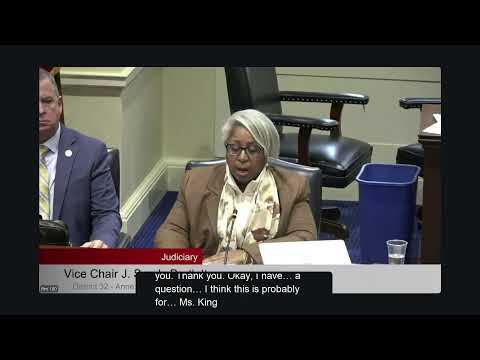
Panel briefs House Judiciary Committee on wiretapping laws, two‑party consent and narrow remedy options
Summary
Experts from NCSL, Maryland legislative counsel and a law professor framed Maryland’s two‑party consent law against national patterns, noting most states are one‑party consent and outlining common statutory exceptions; debate focused on whether to preserve the right while adjusting remedies to let certain private recordings be admitted in limited cases.
Madam Chair and the House Judiciary Committee heard an overview on Nov. 18, 2025, of state wiretapping, eavesdropping and electronic surveillance laws, including which states require all‑party consent and which allow recordings with only one consenting participant. Heather Morton, director of the financial services, technology and communications program at the National Conference of State Legislatures, reviewed definitions and a state consent map and noted that "most jurisdictions have a one‑party consent law" while a minority—including Maryland—require all parties to consent.
The presentation explained statutory terminology used across states and the most common exceptions to consent rules, including law enforcement acting under a warrant, communications providers monitoring networks, correctional facility exceptions and limited parental monitoring of minors. "We did not identify any state with a specific exception…for fair housing testers," Morton said, while noting a handful of jurisdictions treat certain recordings differently by statute.
Claire Rossmark of the Department of Legislative Services summarized Maryland’s Wiretapping and Electronic Surveillance Act (codified in the Courts and Judicial Proceedings Article) and traced its history from mid‑20th century telegraph statutes through the 1977 comprehensive law. Rossmark said the statute "prohibits the interception and recording of any wire, oral, or electronic communication by both government and private parties" but lists exceptions—for example, 911 calls, certain telecom employees, law enforcement with court authorization and specific correctional facility provisions—and carries felony penalties and civil remedies.
University of Maryland Carey Law School professor David Gray framed the question as a policy choice about what rights Marylanders should have. "Do you want to recognize a fundamental right for citizens of Maryland to consent to the interception and recording of their oral communications?" Gray asked. He argued the state can preserve a broad communicative‑privacy right while considering targeted changes to remedies, such as modifying the exclusionary rule, to allow courts to admit privately made recordings in narrowly defined circumstances without converting Maryland into a one‑party consent state.
Committee members asked presenters about practical issues: whether notice plus continued participation can amount to consent in some states; how body‑worn cameras fit into statutory exceptions; and whether advances in AI and deepfakes strengthen the case for additional legal remedies. Morton and Gray offered to provide follow‑up materials and state bill lists from 2025 so lawmakers could analyze penalties, exceptions and litigation trends.
The hearing did not include a committee vote; presenters offered to provide additional research and resources to inform drafting. The committee then continued with local stakeholders' perspectives in a second panel.