Get Full Government Meeting Transcripts, Videos, & Alerts Forever!
Get email alerts on the Human Services Reform topic
No spam. Unsubscribe anytime.
County human‑services staff warn of technology and fiscal risks as state pushes hub districting
Summary
Department of Human Services staff briefed commissioners on a state proposal to create regional 'hub' districts for eligibility programs (Medicaid, SNAP, TANF) and described a proposed phased timeline through 2027; staff emphasized interoperability, training and unresolved fiscal questions tied to federal payment‑error rates.
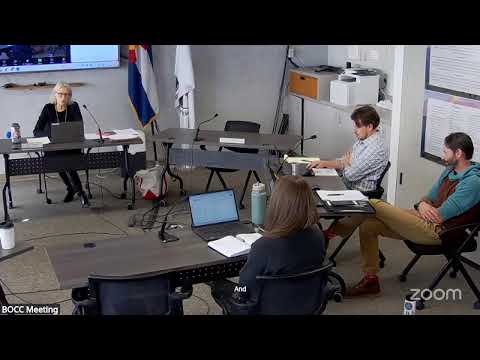
Department of Human Services staff updated the San Miguel County Board of County Commissioners on a state proposal to reorganize eligibility services into regional districts and 'hub' counties, and warned of unresolved technology, contracting and fiscal risks.
Human Services staff described the plan to create 11 districts statewide and said the Southwest district would include San Miguel County along with neighboring counties. Under the proposed model, hubs would centralize eligibility work — Medicaid, SNAP, TANF and adult financial and long‑term care — while counties would retain child welfare, adult protective services and child support. "They're proposing 11 districts across the state... the initial timeline proposed was about 18 months," Linnea (Human Services staff) said, noting the group had negotiated additional planning time and that the proposed phased implementation now stretches into 2027.
Staff emphasized technology and interoperability as primary concerns: counties must be able to share work across the hub model, but the current state systems are "full of flaws, full of bugs" and do not allow seamless case transfers. Commissioners asked how federal 'clawbacks' tied to SNAP payment‑error rates (PER) would be allocated; staff said Colorado's PER is currently above an agreed threshold and that some SNAP funding could be reduced or subject to reconciliation, but how any shortfall would be apportioned to counties is unclear.
Commissioners raised concerns about rural access, noting residents in remote areas often rely on in‑person help from county staff. One commissioner warned that centralized eligibility and potential staff reductions could make it harder for clients who lack transportation or reliable internet to get assistance. Staff said the state has acknowledged the need for improved technology, and directors have asked for more time and training; a phased timetable currently proposes hub launches through January 2028 and a Southwest rollout around September 2027.
No formal board action was taken; commissioners asked staff to continue to monitor the proposal, share updates, and coordinate with Colorado Counties, Inc. (CCI) and regional partners.