Get Full Government Meeting Transcripts, Videos, & Alerts Forever!
Get email alerts on the Mobile Food Ordinance topic
No spam. Unsubscribe anytime.
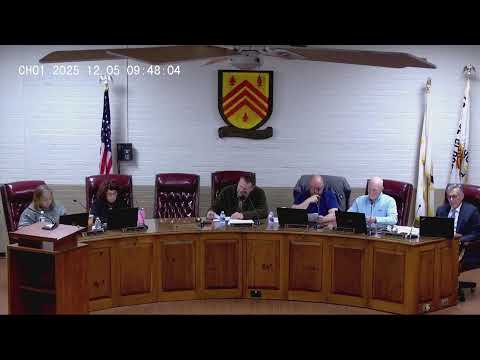
Glocester council continues public hearing on revised mobile-food vendor rules after residents press for clearer definitions, limits and fee rules
Summary
Residents and local businesses pressed the council for clearer definitions, permitting rules and fee structures in a draft Chapter 206 for mobile food establishments; town staff said state licensing applies and the council voted to continue the hearing to the first meeting in January for edits and answers.
The Glocester Town Council on Dec. 4 continued its public hearing on proposed amendments to local vendor rules after lengthy public comment and back-and-forth with staff about definitions, liability and fees.
Residents and business owners told the council the draft ordinance leaves several key terms ‘‘open and vague,’’ questioned how the town will set limits on annual permits, and urged clearer rules for private events. Robert Baumann, a resident, said the draft could increase town liability if private-property vendors require a town permit: "So I think once the town does that, you are taking liability. You're gonna be liable," he said. Cindy Baumann and other residents also urged the council to explain whether tents, chairs and other private-event fixtures would fall under the town's jurisdiction and whether penalties were appropriate for private gatherings.
Mulberry Vineyards owner David Wright described practical hurdles for event hosts and vendors, from verifying insurance to the timing of daily permits: "We're not Cranston or Warwick or Narragansett, where they have a plethora of food trucks," he said, arguing that Glocester's limited vendor market and sporadic events require flexible, administrable rules.
Town staff, speaking from a regulatory perspective, said the draft is intended to align local practice with state law and to distinguish mobile food establishments (MFEs) from historic hawkers and peddlers provisions. "In order to be, operate a truck, you have to have a state license. And that license gives you the right to operate anywhere in the state, provided you also have a town license," an unidentified staff presenter said, explaining three permit categories: annual license holders, event organizers and mass gatherings. The presenter said the draft explicitly adds a daily-permit option that local practice had not clearly authorized before.
Speakers pushed for specific clarifications the council could adopt: how the council will set the number of annual permits (the community has informally operated with five), whether annual permits are transferable or refundable for rain dates, how the town will verify state licenses and insurance (photo on a phone vs. clerk verification), and whether the penalty and enforcement language (one speaker cited a minimum $250 and maximum $500 fine) is appropriate for private-event contexts.
After hearing questions and a promise from staff to collect and respond in writing to outstanding items, the council voted to continue the public hearing to its first meeting in January to allow time for edits and written answers.
The hearing will resume in January with specific follow-ups on definitions, fee structure, enforcement procedures and any recommended revisions to the draft ordinance.