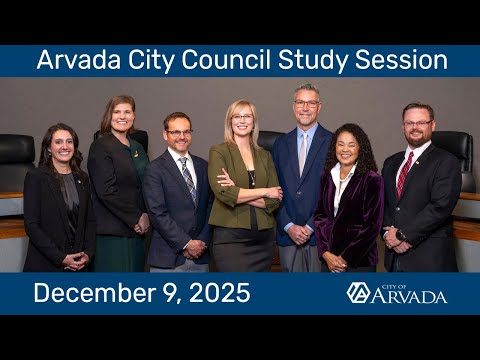
Arvada staff proposes new bylaws with limits and structure for public comment; council asks for more data
Loading...
Summary
City attorney Nora Stinson presented a proposed rewrite of Arvada’s council rules into bylaws that would reorganize procedures, limit the first public-comment period to either 10 speakers or 30 minutes (proposal), and adopt a more concise parliamentary guide; council members raised legal, equity and transparency concerns and asked staff to return with data and revised options.
Nora Stinson, a lawyer in the Arvada city attorney’s office, presented a proposed rewrite of the council’s rules into a tiered bylaws document and told the council the goal is clarity and usability rather than perfection. "There is no such thing as a perfect document," Stinson said, describing the project as a reorganization of material that in many places is simply being moved from the existing rules into appendices and a streamlined bylaws section.
Stinson said staff surveyed 10 home-rule peer cities on the Front Range and found Arvada an outlier: it is the only surveyed city that offers two public-comment periods and one of the few that does not limit the number of speakers or the total time. In 2025 the city’s first public-comment period ranged from two minutes to 72 minutes, Stinson said. As a result, the draft bylaws would give the first public-comment period more certainty by limiting it either to 10 speakers or 30 minutes, with speakers beyond that moved to a second public-comment period and allowed five minutes each. For public hearings the draft formally codifies existing practice of three minutes per speaker and permits written comments to be submitted to council.
Supporters of limits said the change aims to protect attendees who come for time-sensitive agenda items and to make meeting timing more predictable for staff and participants. "Reasonable time, place and manner restrictions" have legal precedent, one legal adviser told the council, and alternatives such as a second comment period or written submissions reduce constitutional risk.
Opponents and some council members said the proposal raises equity and perception concerns. "The issue is about access and infringement of rights," an unidentified council member said during the discussion, arguing that reducing the first-comment window could disadvantage residents who cannot stay late because of caregiving or work. Several council members urged staff to provide more data—median, average and frequency of long sessions—before the body adopts numerical limits.
Council members also debated related procedural changes in the draft bylaws. Stinson proposed replacing the 800-plus-page Robert's Rules of Order with a shorter, Colorado-focused manual often called "Bob's Rules," endorsed by the Colorado Municipal League. Council members discussed how Bob's Rules treats friendly amendments (putting the motion in the hands of the body rather than the mover) and whether the council should require explicit votes on amendments to preserve a clear public record. Several members urged clearer delineation between the discussion phase and the formal vote so that members do not publicly commit to a position before hearing all debate.
Other issues raised included: whether informal pre-meeting sessions at 5 p.m. should be livestreamed or recorded (several members favored more transparency); how to define remote participation exceptions and quorum rules for quasi-judicial matters; and whether the consent-agenda language should better reflect current practice for removing items prior to adoption. Council members also discussed "pooling" time at public hearings, where groups prearrange to yield accumulated minutes to a spokesperson; Stinson said three peer cities allow that practice with clerks' office guardrails.
Stinson closed by describing the next step: staff will return with a revised draft that incorporates council feedback and with supporting data on public-comment timing and meeting start times for public hearings. She noted that, if council chooses to move forward, the final bylaws would be adopted later by resolution placed on a future meeting agenda. The council did not vote on the bylaws at the session.
The council asked for specific data points including the median and average lengths of the first public-comment period across business meetings, how often meetings extended and how late public hearings began, and examples of peer-city practices. Staff said they would present options (including no change, 30, 45 or 60 minutes, plus a "no change" option) and language clarifying guardrails for pooling and for preferring city residents when appropriate. The council discussion is expected to resume after staff returns with the revised draft and data.