
Board grants side-setback variance for Katkay Lane house despite split vote
Get AI-powered insights, summaries, and transcripts
Subscribe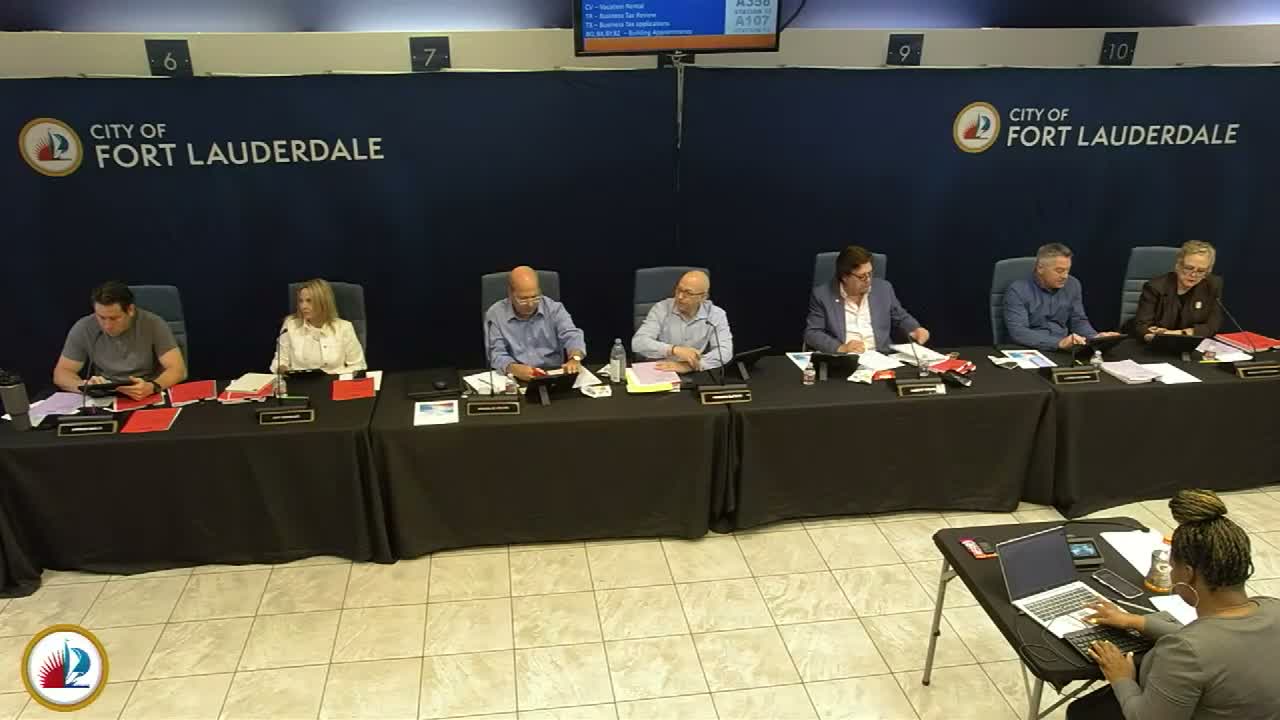
Summary
The Fort Lauderdale Board of Adjustment granted a variance allowing a 1-foot-plus north-side setback deviation for 2418 Katkay Lane, enabling the owner to reuse existing foundations and add a second story after debate over whether the project met hardship criteria.
The Fort Lauderdale Board of Adjustment voted to grant a north-side setback variance for 2418 Katkay Lane, allowing the owner to rebuild over portions of the existing foundation and add a second story.
Attorney Stephanie Teuthegar, representing homeowner Michael Dunbar, told the board the house predates current city zoning because the neighborhood was annexed from Broward County. Teuthegar said the existing foundation sits roughly 5 feet, 7 and 3/4 inches from the property line and that the request seeks to retain that existing condition rather than move the house to meet a newer 7 feet 6 inches standard. She presented a neighborhood survey showing 49 of 82 nearby homes (about 70%) have side setbacks smaller than today’s code and said preserving the foundation reduces tax and construction impacts.
The request prompted sharp questioning about the variance hardship criteria. Board member Jason objected that the project — which includes significant additions and a new second story — appeared to be a substantial rebuild and said he did not believe the application met the required legal standard for a variance. Other members pressed whether the work was renovation or effectively new construction and whether an adopted zoning standard could itself constitute a qualifying hardship.
After an initial motion to deny failed, board member Bob moved to grant the variance, calling the project rehabilitation and pointing to the property’s pre-existing condition on the tax roll. The motion passed on roll call, 6–2. The board’s action allows the owner to maintain the home’s existing footprint on the north side, as described by the applicant, while meeting code on the other sides of the house.
The board’s packet and testimony indicate the variance affects only the north-side setback; the applicant said the other setbacks on the front, rear and opposite side conform to current code. The building department advised the board that the work exceeds Florida’s 50% threshold used to determine whether a remodel must comply fully with current code, which is why the applicant sought a variance rather than a code compliance determination.
Next steps: the board granted the variance at the meeting; any administrative follow-up or permits required for construction must be processed by the building department before work begins.