
Everett planners weigh bigger stream buffers, stream-typing rules as code update moves forward
Get AI-powered insights, summaries, and transcripts
Subscribe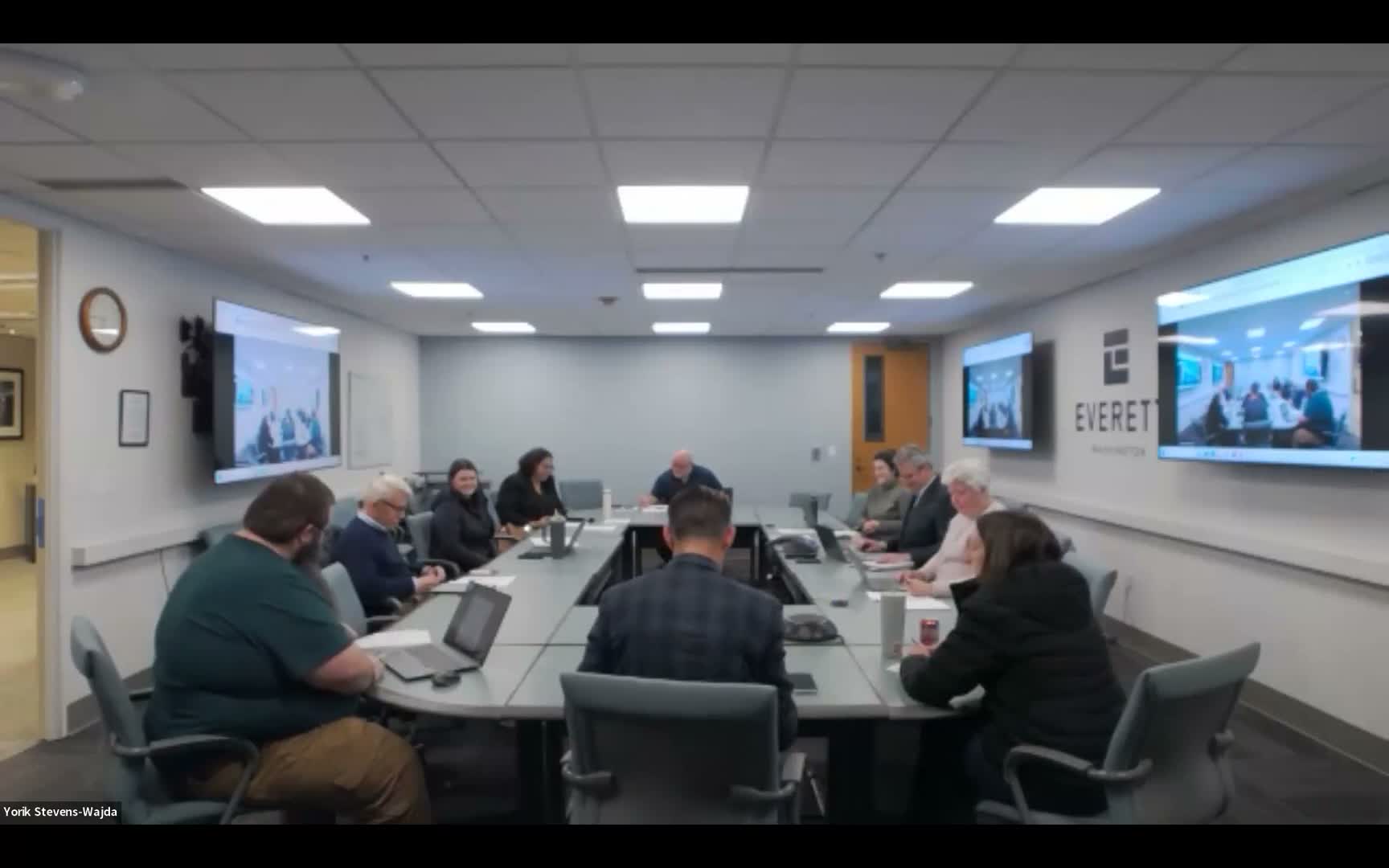
Summary
Planning staff presented a draft update to Everett's critical areas code that would adopt updated stream-typing definitions, revisit buffer widths for fish-bearing (Type F) and non-fish streams and add incentives for daylighting culverted streams; staff said it will return Jan. 20 with maps and draft code language.
Teddy Holbrook, the City of Everett environmental planner, briefed the Planning Commission on Jan. 6 on a draft critical areas code update and urged the commission to focus on two questions: whether to adopt updated Washington Administrative Code stream-typing definitions and what buffer-width standard best preserves ecological function while limiting impacts on development.
Holbrook said the city posted an Oct. 31 review draft online and has collected comments from the Washington Department of Fish and Wildlife (WDFW), the Department of Natural Resources, the Tulalip and Snoqualmie tribes, the Master Builders Association and Sound Transit. "We've received comments from several public agencies and some public," he said, and staff is preparing a comment-response matrix that will show each commenter, the code context, the city's response and any proposed text changes.
Why it matters: agency and tribal reviewers pressed the city on stream classification and buffer widths. Holbrook told the commission the city is considering adopting the Washington Administrative Code's stream-typing definitions that will be updated on 03/01/2026 and said staff will evaluate buffer options of roughly 100, 150 and 200 feet to show practical impacts. Commissioners asked for concrete, parcel-level analysis; staff said the city has an interactive web map that overlays proposed buffers on Everett parcels and that it will present maps and citywide statistics when the update returns to the commission.
Key details and debate: Everett's current rules differentiate buffer width by vegetation (for non-fish streams: 50 to 75 feet depending on vegetation; for fish-bearing streams the current standard is 100 to 150 feet). WDFW and tribal commenters recommended a function-based approach, including a site-potential-tree-height metric that can be roughly 200 feet; Holbrook said staff "do not anticipate staff recommending going up to the site potential tree height" but will closely evaluate Type S and F streams. Holbrook framed the update as aiming for "no net loss" of critical-area functions and values and asked the commission to balance ecological goals and predictability for applicants.
The presentation also covered incentives for voluntary daylighting of piped streams (removing streams from culverts and restoring natural channel conditions). Holbrook cited an example: "Bellevue who requires a 50-foot setback from stream on the ground, and you can reduce that to 25 if you daylight it," and noted Sound Transit is interested in daylighting a station-area stream but does not want to incur a larger buffer solely because it restores a stream.
Next steps: Holbrook said staff hopes to return to the commission on Jan. 20 and to brief the City Council in February, and encouraged additional public comment through the project webpage and email. Staff committed to share the web map and quantification of impacts for the buffer alternatives before any formal recommendation.
The commission did not take a formal vote on the draft at the Jan. 6 meeting; staff will bring revised draft language and mapping back for further deliberation.