Highlands board hears safety, noise and economic arguments over Food and Wine festival
Loading...
Summary
At a Jan. 15 work session, police and fire officials warned that holding the Highlands Food and Wine main event on narrow Main Street creates crowding, delayed emergency access and public‑safety risks; festival organizers and hospitality representatives defended the event’s economic benefits and offered mitigation steps. The board agreed to convene stakeholders for further study.
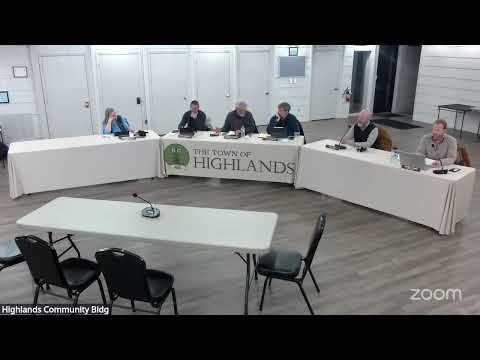
The Town Board of Commissioners on Jan. 15 held a work session focused on the Highlands Food and Wine festival after police and fire officials flagged safety and public‑nuisance concerns while festival organizers and local businesses described economic benefits.
Chief Holland, the town police chief, told the board that "the Highlands food and wine event brings significant tourism and visibility to our town" but warned that "the narrow space between buildings becomes dangerously congested when large crowds gather, especially with widespread alcohol consumption." She said emergency response during the November event was delayed because "crowd congestion and barricades delayed emergency response" and reported multiple intoxication incidents and patrons who required first‑responder assistance.
Captain Forrester of the Highlands Fire Department described egress and apparatus‑access problems, saying crews at times must "get the ambulance ... to them ... and get all their equipment, which is a lot in that situation," and that moving stretchers through dense crowds is difficult. He warned that limited exit widths near the stage and porta‑potty placement could create a stampede risk.
Chief Holland urged caution about permitting a large drinking event in the current Main Street footprint and said the police department "simply cannot safely manage a crowd this big on our own" without relying on outside agencies. She recommended considering relocation to a more accessible venue so alcohol service can be monitored and emergency responders can act more effectively.
Festival organizers pushed back on some of the operational criticisms and offered mitigation proposals. Jack, chair of Highlands Festivals Incorporated, said the main event is designed to bring shoppers to downtown and provided ticketing figures: "800 general admission tickets are sold. VIP weekenders make up 200 tickets, and sponsor comps, working vendor passes, and crew are up to a 200 maximum. At no point has the festival exceeded 1,200 total tickets sold." He said festival staff are willing to hire "as many extra police officers as Chief Holland recommends" and recommended wristband pickup and earlier communications to reduce pre‑gate lines.
Jack also addressed sanitation and economic claims: he said the festival spends "$10,000 every year" on waste management and contracts with a festival greening group; the organizers reported diverting "3,600 pounds" of waste in 2024 and "5,200 pounds" in 2025. He cited a Western Carolina University study that he said found approximately "$2.5 million" injected into the local economy during the event window and said he would share the full study with the board and public as a docket item.
Business owners offered a mix of support and criticism. Kirk Moore (Oakleaf) said Main Street clogging has reduced parking and, in some years, forced stores to close; he called for an audit comparing the festival’s costs and benefits to downtown merchants. Blythe Singer of Old Edwards Hospitality Group said the event is "world class" and important to hotels and restaurants but agreed safety improvements should be pursued. Sabrina Hawkins, a Main Street innkeeper, described sustained loud noise beginning Friday and continuing through the night, blocked customer access and concerns about propane‑cooking tents near sidewalks; she said the event "probably does me more harm than it does good as a business aspect."
Board members discussed whether the Western Carolina study should be released publicly for review; one member noted that a business survey in the study showed many merchants reported no change or negative effects and urged the board to examine the underlying data critically.
No formal action was taken at the workshop. The board directed staff to schedule further stakeholder discussions — including festival organizers, police, fire, merchants and other parties — to explore options such as venue relocation, perimeter control, staffing levels, noise and sanitation plans, and to return with additional information at a subsequent meeting.
The board then adjourned the work session and prepared to resume the regular meeting.