
Dayton schools credit ombudsman work with retention gains and fewer complaints, officials say
Get AI-powered insights, summaries, and transcripts
Subscribe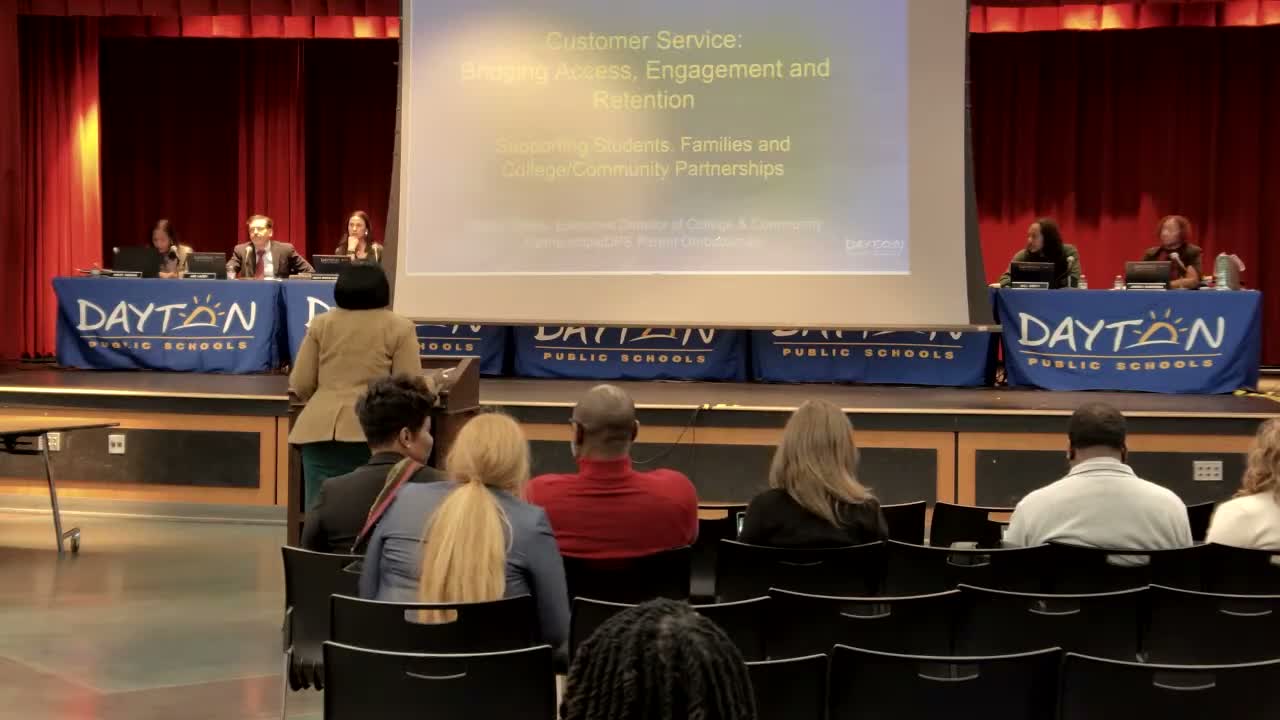
Summary
Sharon Goins, executive director of College and Community Partnerships, told the board the district retained 138 students—translating to roughly $3.0–$3.5 million in associated funding—and reported a roughly 70% reduction in parent complaints after expanded family navigation and restorative practices.
Sharon Goins, executive director of College and Community Partnerships and the district ombudsman, told the Dayton Board of Education on Jan. 13 that newly intensified family navigation, restorative conferencing and partnership work have measurably reduced student departures and complaints.
"We were able to retain 138 students," Goins said during a presentation. She told the board the district estimates roughly $26,000 in associated cost per student retained and said those savings translate to about $3.0 million to $3.5 million retained in the district. Goins also said the district has seen about a 70% reduction in parent complaints over the comparable semester period.
Goins described multiple elements of the program: an ombudsman phone line that reaches families who have not moved out of district, restorative conferences that de-escalate conflicts and partnerships with more than 20 community organizations and colleges. She reported more than 350 students improved attendance as a result of signature partnership programs and said more than 1,000 DPS students participated in programming across elementary and secondary levels in the past year.
Board members asked for further context and baseline numbers. Dr. Cassandra Goodwin asked what the 138 retained students represent as a portion of the total students who left the district; Goins said she would provide the fuller breakdown after the meeting. Other members pressed for details about how complaint counts were gathered and whether new case-management software will change reporting; staff said a K12 Insights implementation is intended to centralize complaint tracking.
The superintendent and staff said they will share supporting slides and more detailed metrics with the board on request.
Why it matters: The district says these retention and complaint reductions directly affect both student outcomes and district revenues and recommended follow-up reporting to validate the numbers and clarify baseline comparisons.