
Expert warns HR 1 could shrink state revenues and raise costs for SNAP and Medicaid in Vermont
Get AI-powered insights, summaries, and transcripts
Subscribe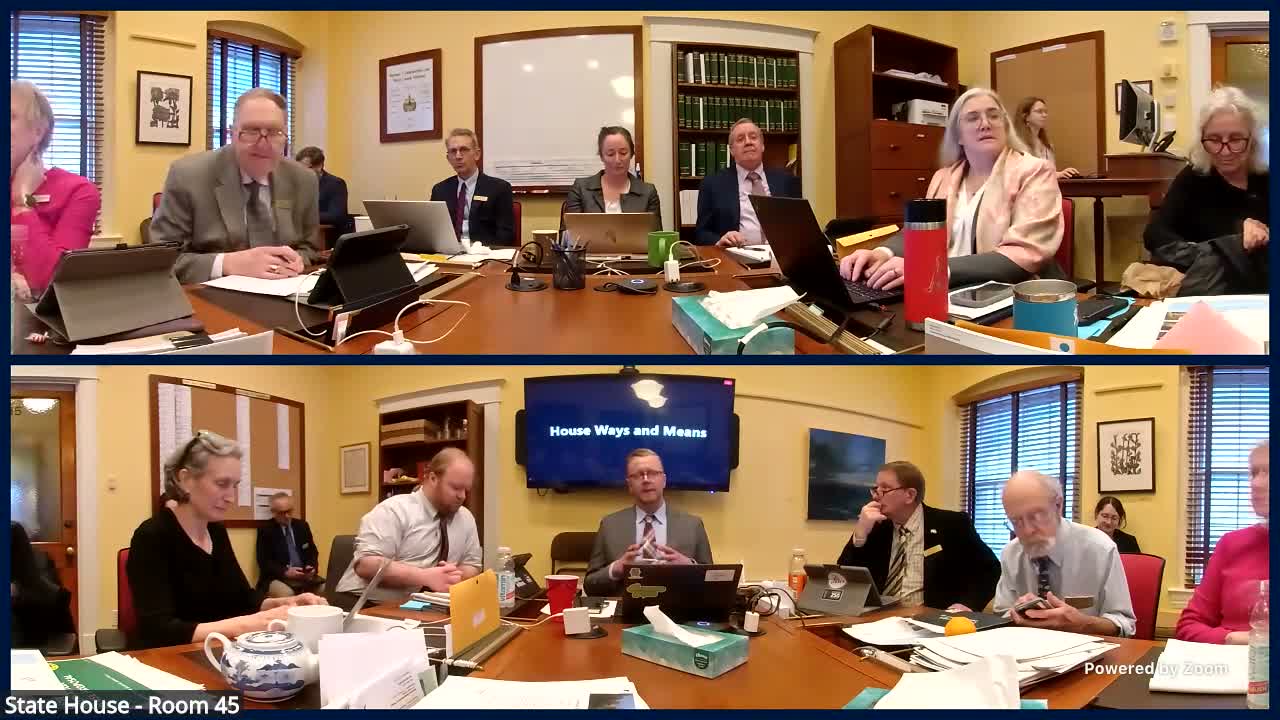
Summary
At a Ways & Means informational session, Wesley Tharp of the Center on Budget and Policy Priorities told legislators HR 1's tax cuts largely favor high earners and will shift costs to states through SNAP and Medicaid changes; he urged Vermont to protect revenues, consider targeted revenue-raising and use savings for one-time startup costs.
Wesley Tharp, senior adviser for state tax policy at the Center on Budget and Policy Priorities, told the Ways & Means panel that the federal reconciliation bill known as HR 1 will redistribute fiscal burdens and opportunities between Washington and the states, and urged Vermont policymakers to prepare now.
"The reconciliation package . . . basically includes, aggregate tax cuts of about $4,500,000,000,000 over a decade," Tharp said, adding the benefits are "tilted pretty significantly towards the nation's wealthier households and corporations." He cited state-level estimates showing Vermont's top 1% could save nearly $60,000 a year on average while households in the bottom 20% would see about $110 in annual savings.
Why it matters: Tharp said the federal tax cuts are paired with programmatic changes that shift costs to state governments and increase the need for state revenue and administrative capacity. "Some of those changes shift significant new responsibilities to state and local governments," he said, citing changes to Medicaid and the Supplemental Nutrition Assistance Program (SNAP) as examples.
Tharp outlined three categories of fiscal challenge for states. First, conformity: some federal changes can reduce state tax revenue if states choose to adopt federal definitions of income or deductions. Second, short-to-medium-term direct costs: new administrative and eligibility requirements for SNAP and Medicaid will require up-front investments in staffing and IT and, in some cases, ongoing state payments. Third, indirect longer-term costs: coverage losses and benefit reductions could raise uncompensated-care costs and other downstream expenses for state and local governments.
Concrete estimates cited to the committee included a projected federal tax-cut total of about $4.5 trillion over 10 years; an estimate that roughly 70% of 2026's tax benefits would go to the top 20% of earners; and a state Department of Children and Families estimate that raising the state share of SNAP administrative costs from 50% to 75% could cost about $8,400,000 annually for Vermont in FY27. Tharp also said new SNAP rules could require states to pick up 5% to 15% of food-benefit costs beginning in October 2027 depending on error rates, and that Vermont's current error rate was about 5.13%, just under the threshold that would trigger added costs.
On Medicaid funding tools, Tharp warned HR 1's limits on provider taxes and changes to 1115 waivers could reduce revenue and complicate existing demonstrations. He cited an estimate that Vermont's hospital-fee revenue could fall by roughly $15 million starting in FY28 and potentially reach about $133 million annually by FY33. He also said coverage losses nationwide could affect about 15,000,000 people over the coming years, including as many as 16,000 Vermonters, and that uncompensated-care costs could rise by roughly $280,000,000,000 over a decade.
Committee discussion and questions focused on implementation timing, the reliability of federal guidance, and trade-offs between tapping rainy day funds and raising new revenue. Tharp said states face both one-time startup costs (for example, IT and new staff) and possible ongoing liabilities, and recommended three policy approaches: resist automatic conformity to federal changes that would reduce state revenue; consider targeted, progressive revenue measures aimed at those most able to pay; and use strategic savings sparingly to cover one-time costs.
On rainy day funds, Tharp framed best practice as keeping reserves roughly in a 10% to 15% range of regular spending and noted Vermont's rainy day fund in FY25 stood at about 19% of general fund spending, which he described as a cushion that could be used selectively for one-time start-up needs while preserving long-term fiscal stability.
No formal committee votes or motions were recorded in the session. Committee members asked Tharp for his written materials and additional state-by-state analyses; the committee chair said three bills related to the discussion are scheduled for a stacked vote the next morning and planned ongoing work on "revenue preservation" and conformity at a subsequent meeting.
What speakers said (direct quotes are verbatim from the session):
- "The reconciliation package . . . basically includes, aggregate tax cuts of about $4,500,000,000,000 over a decade," Tharp told the committee when summarizing HR 1.
- On coverage losses, Tharp said: "You're gonna have, you know, potentially the surge of people nationwide, about 15,000,000 people nationwide, estimated, including as many 16,000 Vermonters, losing access to Medicaid or, Affordable Care Act marketplace coverage."
- On state options: "States are really under no obligation, to adopt, you know, generally speaking, really any of the federal tax changes under their tax codes that they don't see wise," Tharp said when urging careful state policy choice on conformity.
Next steps: The committee asked staff to share Tharp's written remarks and analyses. The chair noted related bills will be considered the following morning and placed "revenue preservation" and conformity among next week's planned agenda items.
(Authors' note: there were no committee votes during this informational session; all numerical estimates and program names above are those cited to the committee by Tharp or other participants.)