
MDOT project recommends focusing digital investments on field crews, training and procurement alignment
Get AI-powered insights, summaries, and transcripts
Subscribe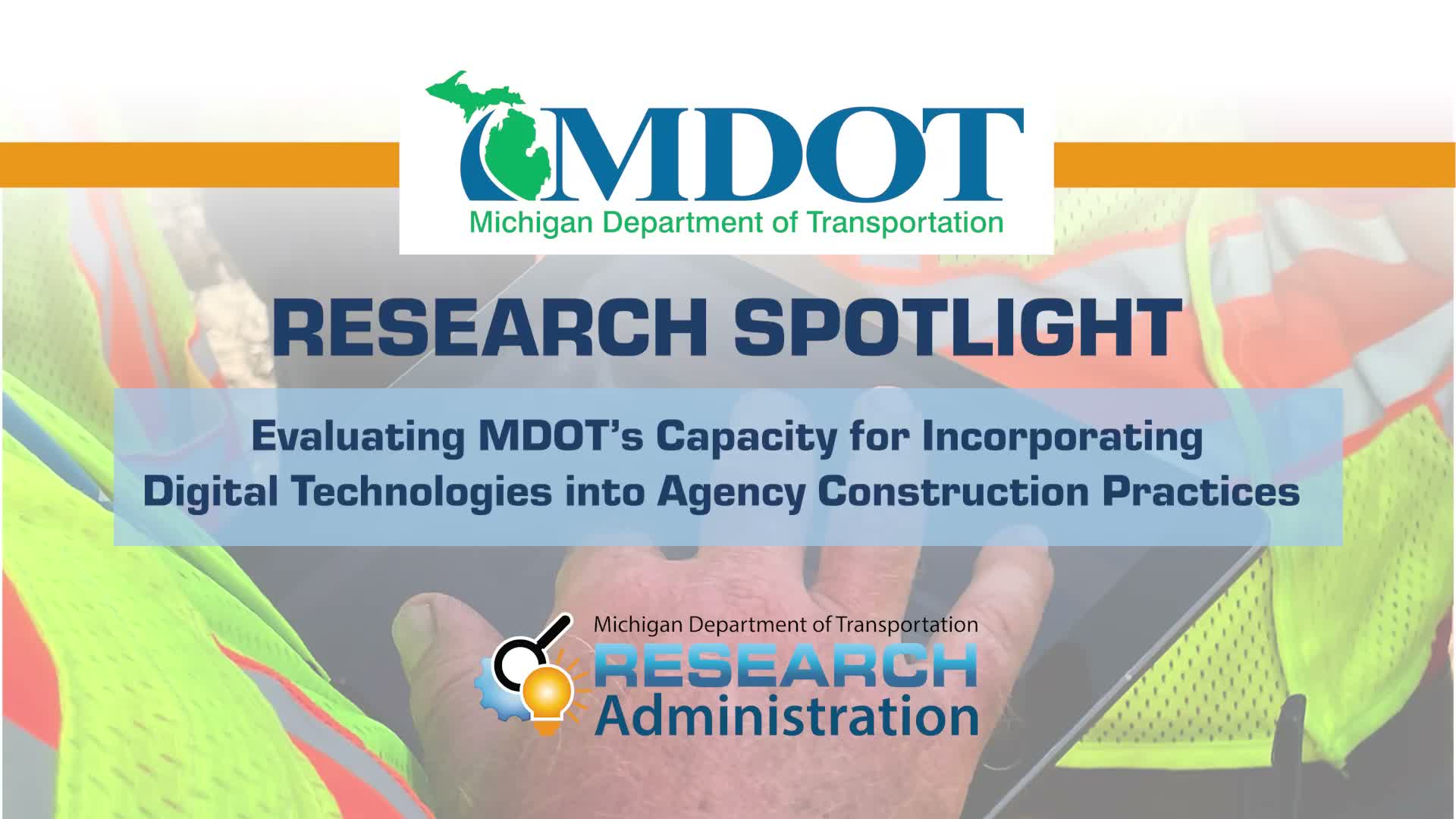
Summary
A presentation on a Michigan Department of Transportation digital-technology project urged prioritizing tools that help construction technicians in the field, statewide equipment alignment, and staff training; specific costs and timelines were not specified.
Speakers in a presentation about the Michigan Department of Transportation’s digital-technology project said digital tools can streamline MDOT operations and recommended focusing investments on field crews, procurement alignment and training. The transcript did not identify speakers by name; comments are attributed to “Speaker 1” and “Speaker 2” as recorded.
"Digital technologies can offer a variety of benefits that increase the speed and efficiency of our everyday lives," Speaker 1 said, summarizing the project’s central finding that digital tools can “help streamline processes and lead to faster results and lower costs.” The presentation, Speaker 1 said, grew from efforts to determine which technologies would yield the greatest return for MDOT.
Speaker 2 said the project’s main focus was construction technicians and how to "improve the efficiency in which road items are staked in the field and how that data is used," identifying field staking as a concrete operational use case for digital investment. Speaker 2 listed several recurring issues: providing statewide alignment with existing survey equipment, procuring new equipment, meeting training needs across the state, and keeping pace with evolving technology. They argued the agency should establish “building blocks” to manage those changes.
Both speakers emphasized that technology alone is insufficient. "A ton of new equipment" is available, Speaker 2 said, but "people and our processes, the way that we get things done and how we train" are critical to successful adoption. Speaker 1 added that the research helped MDOT evaluate priorities so it can continue to provide a high level of service as it grows and adapts.
The transcript records no specific budget figures, procurement schedules, vendor names, or formal motions. Procurement approaches, training plans and timelines were described as priorities but were "not specified" in the presentation. For more information, the speakers directed listeners to MDOT’s website.
This article attributes all quotes to the transcript’s anonymized speakers because no personal names or official titles were provided in the recorded text.