
Chamber urges permitting overhaul, more targeted workforce incentives and funding for retention program
Get AI-powered insights, summaries, and transcripts
Subscribe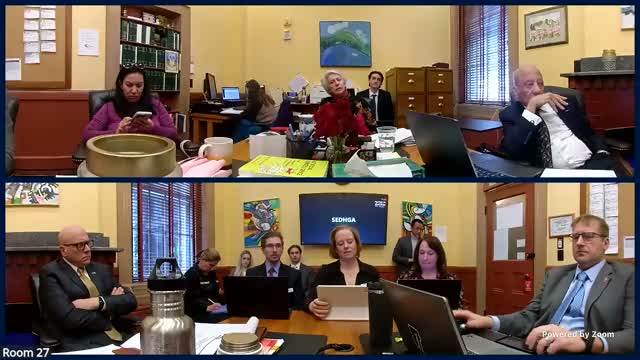
Summary
The Vermont Chamber of Commerce presented a package of near‑term recommendations to the Economic Development, Housing & General Affairs committee: a regulatory cost study, permitting ombudsmen, targeted relocation marketing, expansion/continuation funds for the Green Mountain Jobs program and a study on automation incentives for manufacturers.
Megan (Chamber representative) told the committee the Chamber paired the Futures Project’s data with employer feedback to produce pragmatic policy recommendations centered on predictability for businesses and housing availability as a constraint on hiring. "Housing availability is now a primary restraint on hiring, expansion, and investment," she said.
Isaac (Chamber staff) outlined a first recommendation: a comprehensive regulatory review to identify duplicative permitting and quantify costs to business and the economy. The Chamber said it is pursuing grants to hire MEMO to perform such a study; presenters cited an estimated study cost of about $125,000 and said the work would take six to twelve months.
Committee members discussed creating permitting ombudsmen to help applicants navigate the system and warned against overreliance on untested AI tools after reports that an AI permit navigator produced incorrect outputs for businesses and farms. Members emphasized that where the ombudsman sits (agency placement) matters for whether the position helps applicants or primarily enforces rules.
The Chamber also pushed for improved relocation and recruitment marketing, coordinated with the Office of Workforce Development and the Department of Tourism and Marketing, to help employers use legislative tools in recruitment. Jeremy Little (policy and outreach associate, Vermont Chamber of Commerce) described the Green Mountain Jobs retention program — a $5,000 recruitment/retention incentive — and urged expanding eligibility to associate degrees and professional certifications so employers across sectors, including hospitality and manufacturing, can use it. "We would ask to consider expanding this retention program to not just bachelor's and master's degrees, but to associate's degrees and professional certifications," he said.
On funding, presenters pointed to a prior estimate that continuation funding was in the neighborhood of $1.5 million; members noted the program has been under‑marketed and recommended greater outreach. The Chamber closed with proposals for hospitality workforce training, a potential increase in tourism marketing appropriation, and a task force to design automation incentives that include upskilling and guardrails to protect displaced workers.
No formal committee votes were taken; presenters and members agreed on next steps that include pursuing grant funding for a regulatory study, follow‑up analysis on vacancy and permitting data, and more detailed legislative proposals to come.