
Lehman College panel: AI reshapes film production, accounting workflows and influencer economics
Get AI-powered insights, summaries, and transcripts
Subscribe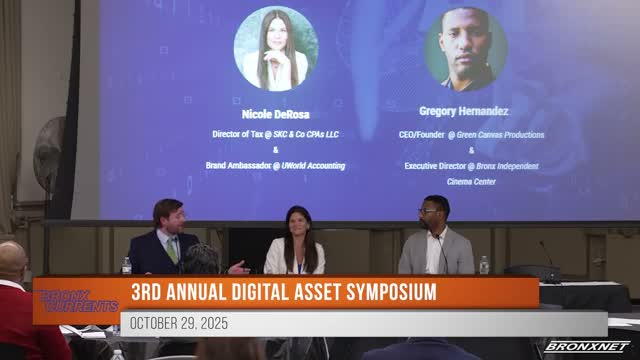
Summary
Film and tax professionals on a Lehman College panel said AI is both disruptive and generative: it can speed editing and research but raises job risks, authenticity concerns and tax reporting questions for influencer income.
At a second panel at Lehman College's Digital Asset Symposium, filmmakers and tax professionals explored how artificial intelligence is changing film production, influencer economics and accounting workflows, urging education, oversight and human review to manage risks.
Gregory Hernandez, a Bronx native who runs the Bronx Independent Cinema Center, described AI'driven tools for film and virtual production as "scary" and "uncharted territory," while also saying the technology creates new roles such as "AI overseer" and opportunities in virtual production. He noted studies projecting substantial job impacts in the near term and argued that community-focused production and new studio investments in the region are expanding opportunities.
Nicole DeRosa, director of tax at SKC and Company, emphasized that income generated through social media remains taxable under the Internal Revenue Code and flagged recent changes in tax legislation (referred to in discussion as "OB3") that altered reporting thresholds and enforcement focus. She recommended rigorous client communication and professional review when AI tools are used for research or drafting advice, describing a workflow where a tax-research AI (Bluejay) drafts memos that professionals then edit and validate.
Panelists debated whether AI-generated content should carry disclosure or a visible watermark. Gregory opposed mandatory watermarks on commercial content if it would disadvantage creators, saying the practical effect could be to reduce an asset's competitive value. Nicole and others warned about deepfakes and urged rights protections, estate planning and contract clarity when AI reproduces actors' likenesses or generates performances.
Discussion also covered workplace implications: panelists said AI can automate repetitive tasks, raising standards for entry-level roles but increasing demand for communication, oversight and skills that complement automated tools. Nicole called for foundational training in professions that increasingly embed AI and said firms must protect client data when using external AI tools.
The panel closed with audience questions about content fatigue, security and how creators might adapt by using community platforms or local exhibition models. Panelists urged training, human review of AI outputs and clear client communication as practical next steps.