
Council debates giving mayor temporary power to declare local emergency; first reading tabled for rewrite
Get AI-powered insights, summaries, and transcripts
Subscribe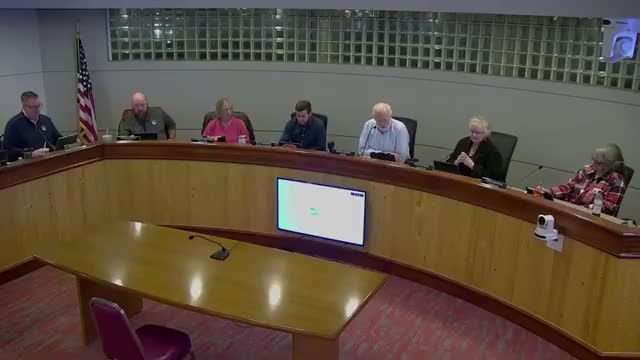
Summary
Council reviewed a draft ordinance to authorize the mayor to declare a local emergency when the council cannot be convened, including powers for curfews, evacuations and procurement exceptions; councilors requested edits to clarify ratification timing and chain-of-command and tabled the measure for a clean ordinance.
City Manager Spencer presented a draft ordinance on Jan. 12 that would authorize the mayor to declare a local state of emergency when the city council cannot be convened in a timely manner. Spencer said the change would align Seaside’s code with the Emergency Operations Plan and FEMA requirements and help ensure timely action during rapidly unfolding disasters.
Key features in the draft included: authorizing the mayor (or, if unavailable, the council president or city manager) to declare an emergency; a requirement that the council ratify the declaration within seven days or the declaration would expire; a menu of specific emergency powers (curfews, evacuations, limited zoning suspensions, expedited procurement and debris removal); required public notification (website, social media and local media); and a post-emergency report to the council within 60 days. Spencer also relayed three staff amendments requested by the emergency manager: add "acts of terrorism" to qualifying events, permit limiting water or other utilities when necessary to preserve life or infrastructure, and allow removal of debris from public or private property to restore safety.
Councilors voiced broad support for clarifying the draft but expressed several concerns. Some argued the council should be the first step whenever feasible and that the mayor’s authority should be tightly constrained to truly urgent situations. Multiple members pressed to add language requiring staff to convene the council as soon as possible ("ASAP") and to clarify that the mayor’s declaration is only temporary pending ratification. Others asked that subsection ordering be fixed for clarity (separating who may declare from what the declaration must include). One councilor urged expressly that ratification occur "as soon as possible but no later than seven days" after issuance.
After discussion, a first-reading motion was introduced but lacked a second; the ordinance was tabled so staff can produce a clean, rereadable draft incorporating the requested clarifications. No emergency powers were enacted at the meeting.
What’s next: staff will redraft the ordinance to reorder and clarify sections on authorization, succession, mandatory notice and ratification timing and return it for a future reading.