
Virginia Beach board sends new student‑demonstrations policy back to committee after heated debate
Get AI-powered insights, summaries, and transcripts
Subscribe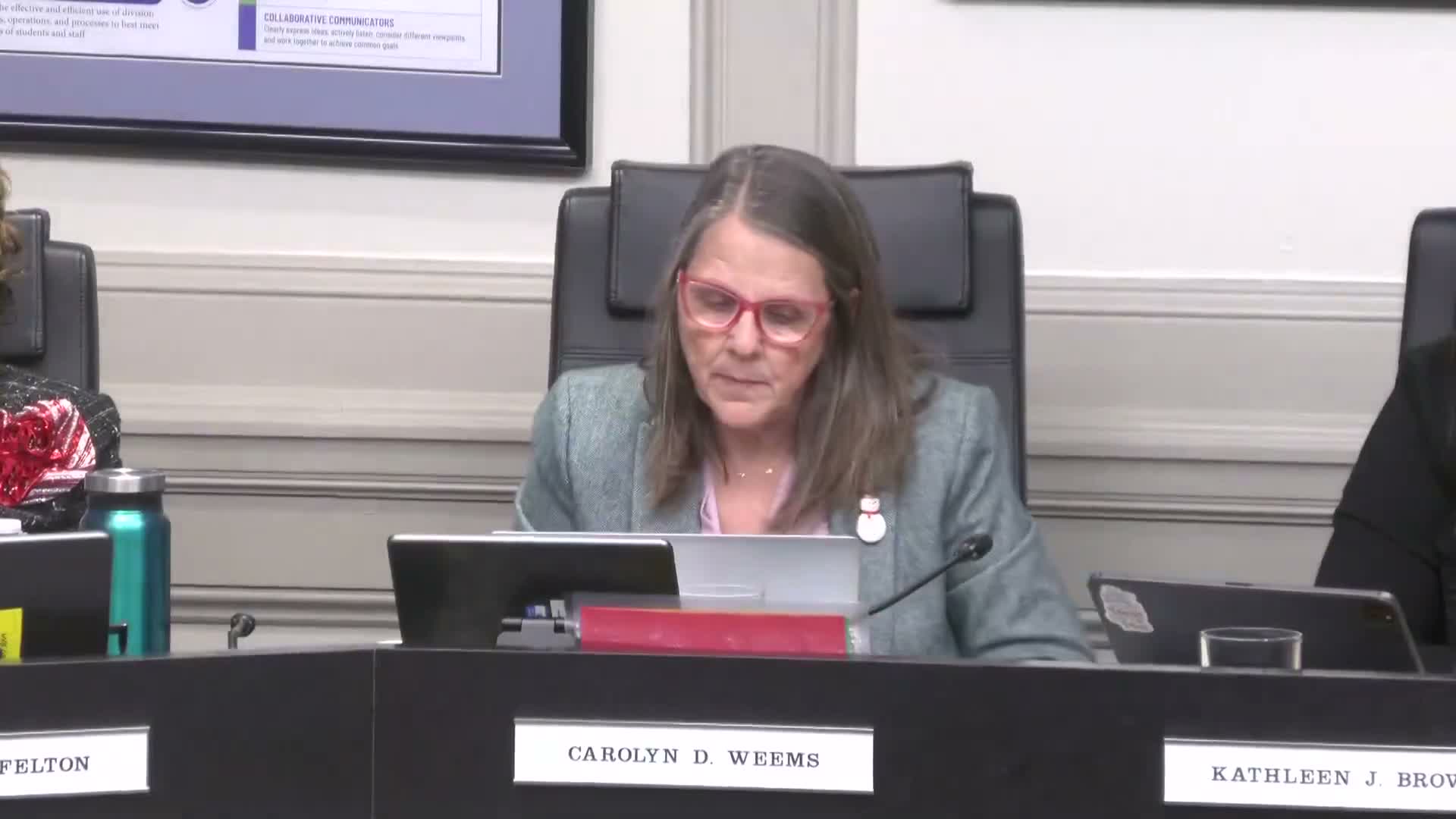
Summary
The board voted 6–5 to return a proposed six‑page policy on student‑led demonstrations to the Policy Review Committee after several members said it was more restrictive than the prior policy and raised First Amendment concerns; PRC members said the draft prioritized student safety and clarity.
The Virginia Beach City Public Schools board on Tuesday voted 6–5 to send a newly drafted policy on student‑led demonstrations back to the Policy Review Committee for additional review, after a wide‑ranging debate over whether the draft was overly restrictive.
The Policy Review Committee brought forward Policy 5‑40, a rewritten six‑page draft that defines student rights and responsibilities, approval processes, school responsibilities, third‑party involvement and prohibited conduct. Cammy Linetti, the school board attorney, told members the draft "will meet the basics of [the] First Amendment," and described changes drawn from other divisions and statutory updates.
Several board members challenged the timing and scope of the rewrite. “This is so much more restrictive than what our policy was before all of these rewrites,” board member Rogers said, arguing the prior policy had been working and warning that the new language could chill student speech. Others, including Miss Melnick and Mister Cummings, raised questions about definitions (for example, what counts as a "demonstration") and whether spontaneous shows of student expression would be unduly limited.
PRC members and supporters, including Miss Felton, said students had been involved in drafting the policy and that the provisions were intended to provide clarity and safety for students. "It was a student that asked to make sure that we define most of what was in this policy," Felton said, describing consultations with students and principals. Chair Kathleen Brown framed the issue as student‑centered: "For me, the protest is for the students," she said, while emphasizing safety and orderly process.
Debate focused on time, manner and place restrictions; whether board members could attend student events without being classified as "third parties"; and the potential for vagueness or overreach in enforcement. Attorney Linetti and staff noted the policy includes appeal rights and is intended to be applied in a fact‑specific manner, mindful of court precedents such as Tinker v. Des Moines.
After extended discussion, Dr. Green moved to return Policy 5‑40 to the PRC for more work; the motion was seconded and passed 6–5. The board’s action means the draft will be revised and brought back to committee before the full board considers final adoption.
The board did not adopt changes to the demonstrations policy at the meeting; members who requested further review said they wanted additional clarity on definitions, the role of third parties, and how the policy would be applied in practice. PRC members said they would take the board's concerns into account when redrafting.