Get Full Government Meeting Transcripts, Videos, & Alerts Forever!
Get email alerts on the Wye Infrastructure topic
No spam. Unsubscribe anytime.
Missoula County outlines 50-year infrastructure plan to unlock housing and industrial growth at the Wye
Summary
County and private planners told a City Club Missoula forum that a 50-year, phased Wye infrastructure plan — covering roads, water, sewer (MBR), schools and parks — is intended to support up to about 10,000 homes and 7 million square feet of industrial development while avoiding low-density sprawl.
At a City Club Missoula forum, Missoula County officials and private planners described a 50-year infrastructure plan intended to enable dense housing and modern industrial development in the Wye area while minimizing sprawl.
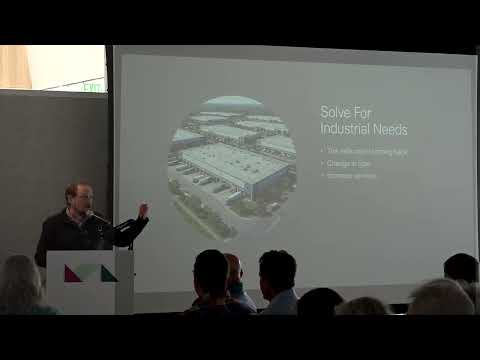
The plan, presented by Andrew Hagemeyer, Missoula County director of community and economic development, and Jeff Smith of WGM Group, lays out phased investments in water, sewer, transportation and public services to support both residential growth and an industrial tax base. "We're trying to solve for two really big problems: housing and our shrinking industrial land base," Hagemeyer said.
Why it matters: County leaders argued that concentrating infrastructure — rather than allowing dispersed low-density growth on wells and septics — will preserve farmland and wildlife, make the local economy more resilient and generate taxable value to fund roads, schools and emergency services. Jeff Smith said the Wye study area is about 3,400 acres and recommended a 50-year planning horizon with phases 0–4 to sequence investments.
Plan highlights and capacity estimates: Smith summarized a parcel-level assessment of more than 700 properties and estimated approximately 800 acres of developable industrial land with potential for more than 7,000,000 square feet of industrial buildings (a figure presenters equated to roughly 10,000 jobs using typical industry ratios). He said about 1,300 acres in planned‑neighborhood zones could support about 8 units per acre — a theoretical capacity the presenters described as on the order of 10,000 homes at full buildout.
Transportation and multimodal goals: The plan models full buildout trip generation of roughly 100,000 vehicle trips per day and recommends building a collector grid, complete‑street standards and a corridor study (West Broadway to Russell Street) to evaluate signals, roundabouts and potential transit service. "We want to capture as many trips within the study area as possible," Smith said, noting barriers created by the interstate and rail line that will require overpasses, underpasses or other crossings for active transportation.
Water and sewer approach: Smith recommended a regionwide aquifer study to assess water quantity and quality before committing to major supply options. For sewer, the plan advocates a stepwise rollout of membrane bioreactor (MBR) treatment facilities for areas outside the city's existing utility service boundary; presenters said MBRs produce high-quality effluent that can enable reuse and irrigation.
Public services and funding: The plan reviews school siting and capacity needs with local districts and flags that existing fire districts will need upgrades and staffing to serve full buildout. Smith said the plan outlines a funding strategy for early phases that mixes private investment with local, state and federal sources; presenters emphasized that detailed financing and implementation steps remain to be worked out.
Housing, jobs and tax rationale: Developer Matt Malott framed an alternative to sprawl: concentrated "town center" growth around job centers such as currently operating industrial employers. He gave examples comparing taxable value per acre at different intensities — citing an Amazon facility that the presenters said yields about $167,000 a year in property taxes — and argued that higher-intensity development can produce revenue to maintain infrastructure.
Community questions: During Q&A residents pressed presenters on school funding and siting, parks and open space, connectivity across the interstate and rail, clean‑energy opportunities and whether the county should consider purchasing existing water systems. Hagemeyer emphasized that school districts control their own financing but said the county could fund studies and help identify school sites; Smith said the plan recommends studying the south‑side Wye water system for possible purchase and eventual inclusion in a wider county-administered network.
Limits and next steps: Presenters repeatedly framed many items as recommendations and implementation steps rather than completed commitments: phasing and funding must be detailed in future work, aquifer study results could change water options, and parcel acquisition and most buildout will be led by private-sector developers supported by county infrastructure. The forum closed with organizers directing attendees to table discussions and noting a City Club session scheduled for Feb. 9 on public‑safety updates.
Quotes: "We're trying to solve for two really big problems: housing and our shrinking industrial land base," Andrew Hagemeyer said. Jeff Smith said, "The Wye area is 3,400 acres in size," and Matt Malott summarized public sentiment by saying, "Nobody likes sprawl."