Mesa council debates 1,000-foot battery storage setback as NextEra rezoning looms
Loading...
Summary
Mesa councilors spent much of a study session reviewing a proposed ordinance that would require 1,000-foot separations between battery energy storage systems and residential uses. Staff and developers said the rule would allow two planned facilities to proceed while one NextEra site would need rezoning; councilors raised safety, land‑use and economic concerns and staff said adoption is scheduled for the Jan. 12 council meeting.
City of Mesa planning staff told council on Jan. 12 that an ordinance introduced earlier would require a 1,000‑foot separation between battery energy storage systems (BESS) and residential land uses, a standard staff said was consistent with recommendations they had been directed to bring forward.
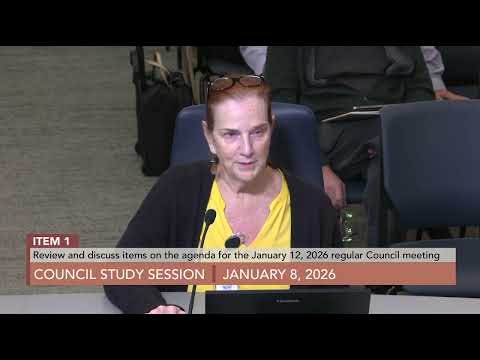
Councilmember Jen Duff said the separation is excessive and harms economic development by reserving otherwise usable land. "This thousand feet does not have any merit or support or evidence that is necessary," she said, arguing the setback wastes land and that smaller buffers — she described 100 or 400 feet — could be adequate if backed by testing and safety conditions.
Staff said two of the sites discussed — one at Signal Butte and another near Ellsworth — can meet the 1,000‑foot rule as currently proposed, but the NextEra site would require rezoning of an adjacent parcel now zoned residential to a commercial or industrial use before it could comply. Planning staff estimated the rezoning process would take roughly two to three months, including a Planning and Zoning board recommendation and a council decision.
City attorneys and planners reminded council that, because the ordinance has already been introduced, the charter prevents making substantive changes the night it comes for adoption; to change the separation metric the council would need to reintroduce a different ordinance and allow the required public notice period. Staff said the council could adopt the 1,000‑foot ordinance on Monday and direct staff to bring back a separate legislative amendment (for example, a 400‑foot setback) for later public review.
The debate mixed technical safety concerns and economic arguments. Vice Mayor Summers and other council members said the 1,000‑foot standard addresses public‑safety worries associated with some BESS chemistries and noted that the state and national fire standards are evolving; Mayor Freeman read a letter referencing adoption of the 2024 International Fire Code and NFPA 855 fire‑safety guidance for BESS. Opponents argued the rule would leave large, unusable land parcels near substations and cited an urgent local electricity shortage and lost economic opportunities tied to SRP’s distribution limitations.
Council asked staff to provide a map of SRP substations and compatibility for battery systems before the Monday meeting and to clarify whether any purchase agreements or development timelines might be affected by adoption. Staff agreed to share the map with council.
The ordinance remained scheduled for a council vote on Jan. 12; staff said the council could adopt the introduced 1,000‑foot measure and later pursue a legislative change if new evidence or technology warranted a smaller setback.