Get Full Government Meeting Transcripts, Videos, & Alerts Forever!
Get email alerts on the Local Governance topic
No spam. Unsubscribe anytime.
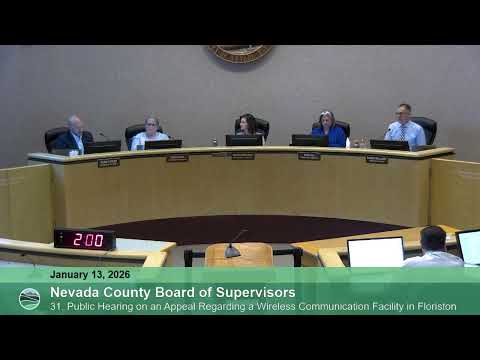
Nevada County board elects Lisa Swartout chair, adopts 2026 legislative platform and OKs optional business‑license pilot
Summary
At its Jan. 13 meeting the Nevada County Board of Supervisors elected Lisa Swartout as chair, adopted a 2026 legislative platform that prioritizes protection of core services and wildfire resilience, and approved a voluntary three‑year business‑license pilot for unincorporated businesses.
Lisa Swartout was elected chair of the Nevada County Board of Supervisors on Jan. 13, 2026, and the board moved quickly to adopt its annual legislative platform and to authorize an optional three‑year pilot business‑license program for unincorporated businesses.
Swartout, sworn in after a unanimous roll‑call vote, told supervisors she planned to make 2026 the "Year of the Small Business," saying the county should be a partner to entrepreneurs and small employers. "Small businesses are the backbone of our local community," she said in remarks to the board.
The board then heard a presentation on the county’s legislative platform and endorsed it by unanimous vote. Staff described the document as a policy roadmap and consent agenda for advocacy in Sacramento; this year’s platform contains 224 positions across five policy areas and identifies 29 priority projects ranging from fuels treatment and bridge repairs to public‑safety and facilities improvements. County staff and outside advocates from the California State Association of Counties (CSAC) and the Rural County Representatives of California (RCRC) emphasized three near‑term concerns: the implementation of federal health‑care changes summarized as "HR1," potential cost shifts that would create unfunded mandates for counties, and wildfire‑resilience funding. CSAC noted that the governor’s budget included $500 million in homelessness assistance (HAP) and proposed changes affecting in‑home supportive services that could shift roughly $234 million in state cost responsibilities; staff said they will pursue clarification and implementation discussions.
Separately, the board authorized an optional business‑license pilot for unincorporated areas, a program staff said is intended to be low‑cost and business‑friendly. County staff estimated roughly 1,000 businesses operate in unincorporated Nevada County and said an official county license can help firms qualify for loans, contracts or grants and streamline emergency communication. The pilot was described as voluntary, with a one‑time county software setup cost of about $5,000 and an anticipated $50 annual fee for participating businesses. Nonprofit organizations would be eligible to participate. Staff told the board the pilot would use a third‑party administrator to avoid adding county staff workload and that participation and metrics would be reviewed at the end of the pilot.
Supervisors praised the platform as a tool to protect rural county priorities and to provide staff and partners with clear direction for advocacy. Several supervisors encouraged staff to use county leaders to testify in Sacramento and to keep outreach active to secure sign‑offs from partner agencies on technical items tied to projects.
The measures passed by roll call without dissents. Chair Swartout said she would pursue partnerships with economic development and county departments to follow up on both the platform and the business pilot.
What’s next: staff will post the adopted platform on the county website and begin vendor selection and outreach for the business‑license pilot; the board asked staff to return with updates and metrics during and at the end of the three‑year pilot.