Get Full Government Meeting Transcripts, Videos, & Alerts Forever!
Get email alerts on the Housing topic
No spam. Unsubscribe anytime.
Half Moon Bay officials review Measure D, direct staff to explore fractional ADU allocations and a downtown map amendment
Summary
City council and planning commissioners held a joint study session to review Measure D's allocation system, heard that ADUs now make up the majority of outside-downtown applications, and directed staff to analyze fractional ADU allocations, rollovers for unused allocations and a possible downtown-map change for the November ballot.
Half Moon Bay officials convened a joint study session to review Measure D, the city's voter-approved growth-management ordinance and its annual unit-allocation process, and gave staff direction to return midyear with options to fractionalize ADU allocations, consider rollovers of unused certificates and place a downtown-map amendment on the November ballot for voter consideration.
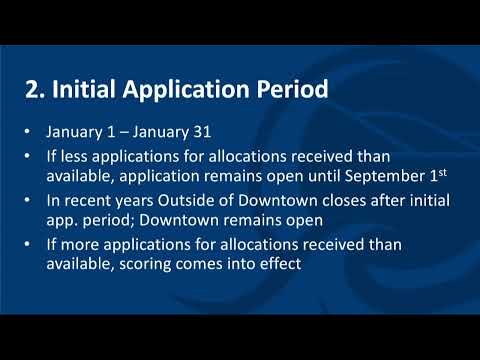
The city planner leading the presentation summarized Measure D's four-step annual cycle: unit authorization in December for the following year, an initial application window (Jan. 1'Jan. 31, extendable to Sept. 1 when few applications are filed), scoring and staff verification, and ratification of scoring by April 1. Staff said the base authorization is a 1% growth cap with an optional 0.5% downtown bonus and noted that ADUs have driven demand: "ADUs might be making up anywhere from 50 to 75% of applications, averaging around 60," the presenter said.
Why it matters: Council members and planning commissioners said the allocation system must balance the city's voter-approved limits with the region's housing needs, safety concerns and administrative feasibility. Several members pushed for clearer, more objective scoring, improved tracking of deed-restricted units and incentives for fire-resilient construction.
During the staff briefing, officials and commissioners raised several recurring issues: when an allocation is considered vested (staff said an allocation vests when an applicant submits required entitlement applications such as coastal development permits or planning entitlements, and that a formal building permit submission is required to trigger the vesting practice), how the city treats expired versus unused allocations, and whether the downtown boundary used by Measure D should be redrawn to match the town-center map in the Local Coastal Program.
Staff identified a handful of technical points that guided the conversation. The scoring criteria were presented in the materials as "section 17 0 6 1 2 0," and staff described the walkability measure (a 12-point category) as based on a half-mile buffer around civic anchors such as city hall, the library and transit stops. Staff also noted a large scoring incentive for deed-restricted units: "There is one scoring item on the application that is worth 35 points," the presenter said, and explained that a deed restriction would require a recorded affordable housing agreement running for 55 years.
Council members and commissioners pressed staff on tracking and enforcement. Vice chair Hernandez said the city should not only award points for deed restrictions but also develop a public, durable tracking system so the city and the community can see whether deed-restricted units are being built and maintained. Staff acknowledged that few single-family deed restrictions have reached full construction to date and that a tracking mechanism would require additional staff time to implement.
On the downtown map, several participants argued the Measure D downtown boundary is inconsistent with the Local Coastal Program town-center map and includes agricultural or open-space parcels that council members find inappropriate for allocation. Staff said a map amendment would require Coastal Commission review and suggested the next feasible opportunity to place a map question before voters would be the upcoming November ballot if council directs staff to pursue it.
Policy and process suggestions discussed included: - Fractional allocations for ADUs and potentially exempting or assigning reduced fractions for JADUs, so an ADU does not always require a full Measure D certificate. Council members indicated preliminary consensus to pursue options for fractional ADU allocations and draft code amendments where allowable. - Rollovers or administrative reallocation of expired or unused allocations to prioritize ADUs or affordable housing; staff said some rollovers are anticipated in the city's housing-element commitments and could be implemented through code changes, while other changes may require a ballot measure. - Simplifying the scoring workload, including one commissioner's proposal to identify clearly prioritized projects (for example, deed-restricted or fire-protective projects), exclude noncompetitive applications, then use a lottery for the closely scored middle group to reduce staff burden. - Incentivizing fire-resilient construction and defensible-space measures in the scoring system, given updated fire-map concerns.
Public comment included a suggestion from resident Greg Jamieson to award small reapplicant credit to applicants who pay fees and repeatedly apply, and a question from Nancy Fontana about how deed restrictions affect seniors who might later wish to occupy an ADU. Staff said eligibility and income limits for deed-restricted units are set at the state/county level and would be spelled out in the recorded affordable housing agreement.
What happens next: Council and the planning commission asked staff to return midyear with two or three scoring options (including one incremental revision and at least one more radical alternative such as a lottery), analysis of whether specific changes can be made by code amendment or would require a ballot measure, recommended language and outreach for any proposed November map amendment, and an assessment of staffing needs to shorten the scoring timeline. Planning commissioners said they would welcome multiple options for discussion.
The session ended with informal consensus on pursuing fractional ADU allocations, examining rollovers and improving transparency and tracking; no formal vote was taken. The council and planning commission adjourned after the staff committed to return with written options and analyses.