Get Full Government Meeting Transcripts, Videos, & Alerts Forever!
Get email alerts on the Department Of Health topic
No spam. Unsubscribe anytime.
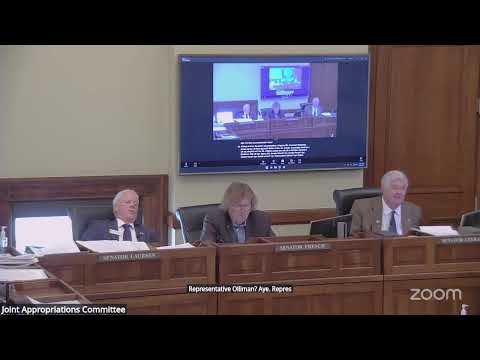
Appropriations committee reshapes Department of Health budget; funds added to reduce DD waiver wait list
Summary
The Appropriations Committee adopted multiple amendments to the Department of Health budget, including reductions to some provider increases, a $5.45 million increase for emergency waiver placements, and a $4.5 million allocation aimed at cutting the DD waiver wait list by 50%. Lawmakers debated impacts on Medicaid, tribal services and provider capacity.
The Appropriations Committee spent the second day of biennial budget markup revising the Department of Health budget, approving targeted funding shifts and several footnotes that narrow how newly authorized money may be used. Key actions included authorizing emergency waiver placement funds and a separate allocation intended to halve the developmental disabilities (DD) waiver wait list.
Representative Pendergraft moved a package of changes and footnotes that the panel adopted. On the wait‑list item he proposed an increase of $4.5 million general funds with matching federal funds and asked the committee to add a footnote specifying that the money should be used "to reduce the DD waiver wait list by 50%." Director Richards told the committee agency testimony indicated the figure would cover roughly half the wait list.
The committee also approved Representative Pendergraft’s earlier motion to add $5,450,000 in general funds (and an equal federal amount) for emergency waiver placements and provider rate support. The committee added a separate footnote directing that those funds be used for emergency placements and to reduce the wait list where feasible.
Members pressed the panel on tradeoffs between immediate services and longer‑term cost control. Representative Sherwood, explaining rate rebasing for behavioral‑health providers, urged caution about trimming staff and pay increases that keep providers in business: "for every 1% our error rate goes up ... that could cost the state $4,000,000 that we would owe the feds," he said, arguing that fewer staff or higher workloads can increase federal payment error risk.
There was also vigorous debate about 100% federally funded lines. Representative Pendergraft proposed limiting increases to Indian Health Services funding; Representative Sherwood noted that Wyoming Medicaid is required to adopt new federally calculated rates and asked why the reduction was proposed, while Senator Driscoll urged caution: "you're literally looking people that live in Wyoming ... this is about people, folks," he said, warning cuts could send patients across state lines for care.
The committee repeatedly used footnotes to define the intended use of funds when the omnibus tables would otherwise obscure distinction between units. For example, after discussing provider rate increases and the relationship to previously authorized ARPA money, the panel restricted new funding to provider rates and emergency placements by footnote so the appropriation could be tracked in the consolidated health‑care finance totals.
What happens next: the committee closed Agency 048 (Department of Health) after a roll call that recorded 12 ayes. Multiple related measures and one large package were set aside to be considered as separate bills (see votes roundup). The committee signaled it will take up certain capital and larger transformation bills later in the week.
Sources: Committee debate and motions recorded on the Appropriations Committee transcript. Representative Pendergraft moved the DD‑waiver and emergency placement allocations; Representative Sherwood and Senator Driscoll offered the principal floor objections and context.