
Madison council adopts 12-month moratorium on large data centers to study local impacts
Get AI-powered insights, summaries, and transcripts
Subscribe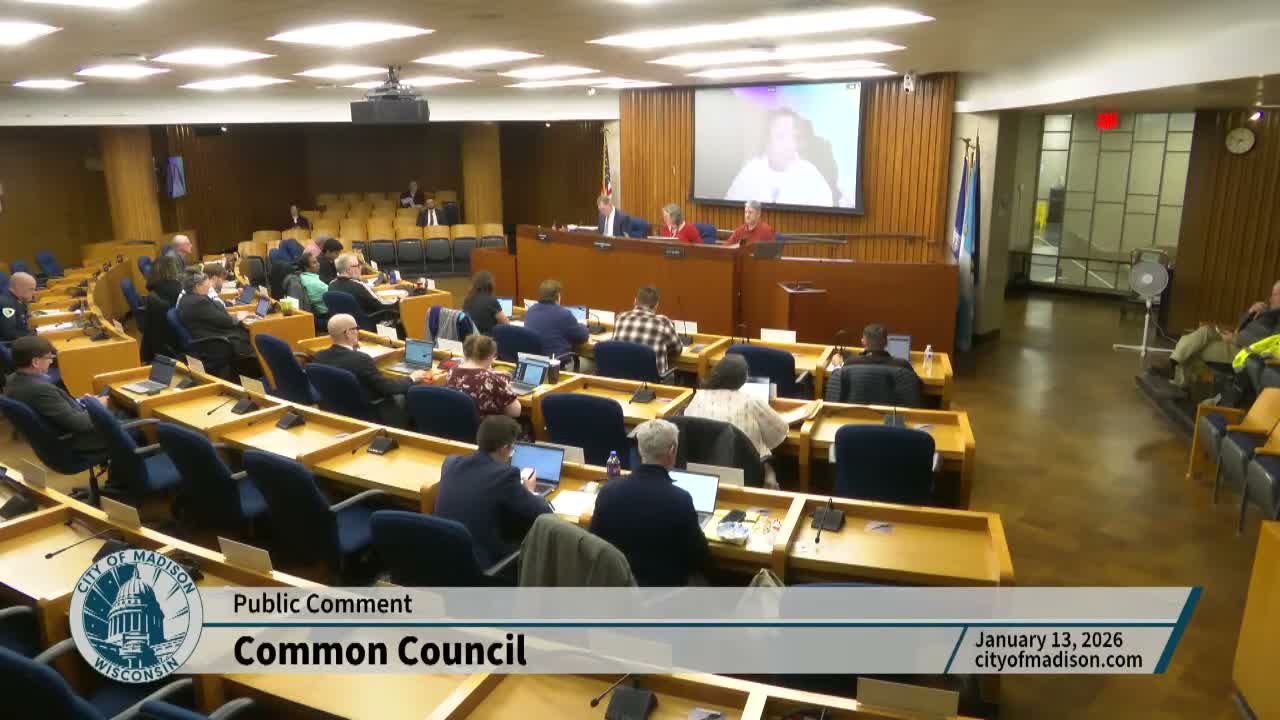
Summary
The Madison Common Council on Jan. 13 adopted a temporary, 12-month moratorium on zoning approvals for data centers and telecommunication centers larger than 10,000 square feet to allow staff to research energy, water and land-use impacts and draft long-term regulations.
The Madison Common Council voted unanimously on Jan. 13 to adopt a one-year moratorium on the consideration or issuance of zoning certificates for data centers and telecommunication centers that are the principal use of a property and exceed 10,000 square feet.
The ordinance, introduced as Legistar file 91135, will pause administrative approvals for the covered category while city staff convene stakeholders, study utility and environmental impacts, and prepare a clear, permanent zoning definition and permitting standards. Director Tuttle, in a staff presentation, said the moratorium is intended as a planning tool and would expire 12 months from the ordinance’s effective date.
"This establishes a moratorium on the consideration of zoning approvals for that period of up to 1 year," Director Tuttle said, adding staff will define a data-center definition for the moratorium, reiterate the city’s existing telecommunication-center definition and work with utilities, economic development officials, sustainability stakeholders and the university to craft long-term rules.
During public comment, power engineer Jaden Troke, a District 5 registrant, urged the council to pause approvals because, he said, the grid upgrades data centers require can shift costs onto electric customers. "It's massive corporations like Meta, it's Google," Troke said, arguing that taxpayers end up bearing distribution-upgrade costs and that a moratorium would allow lawmakers to ensure companies "pay their fair share to actually upgrade the grid." The Greater Madison Chamber of Commerce, represented by David Aguayo, urged the council not to adopt a year-long moratorium, calling it a "blunt instrument" that could shutter investment and asking instead that the proposal be referred to the economic development committee.
Council members asked staff to clarify how the city administers existing telecommunication uses, how a project larger than 10,000 square feet would be processed today and whether the city could use impact fees or require utility contributions. Staff said many such projects are now administered as telecommunication centers and can be approved administratively in districts where the use is allowed; conditional-use review applies in a smaller set of districts. City staff said legal review and conversations with the regional utilities are part of the moratorium work plan.
Supporters on the council characterized the pause as temporary and constructive. "This is not a permanent moratorium ... it's meant to be instructive to allow staff to educate themselves and position themselves in a way to give us solid advice," Alder Evers said. Alder Govindarajan urged including the university in stakeholder engagement because of local research and workforce connections.
The council recorded a unanimous voice vote to adopt the moratorium. Staff indicated they will prepare proposed replacement ordinances and may refer subsequent proposals to boards and commissions, and to committees such as economic development or sustainability, prior to returning to the council for final action.
Next steps: staff will define the moratorium's precise effective date, undertake the stakeholder engagement laid out in the staff memo, and present draft zoning language and any related non-zoning ordinances before the moratorium expires.