
League of Cities warns Tallahassee commission that property‑tax proposals could cut local revenues
Get AI-powered insights, summaries, and transcripts
Sign Up Free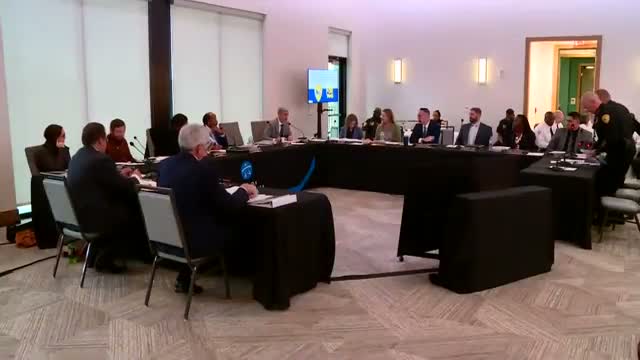
Summary
Casey Cook of the Florida League of Cities briefed commissioners on multiple House proposals — including HJR209 and a 10‑year phase‑out concept — and warned the lack of implementing bills raises uncertainty about how lost revenue would be replaced and which services would be affected.
The Florida League of Cities’ legislative director, Casey Cook, briefed Tallahassee commissioners on a fast‑moving legislative session and multiple property‑tax proposals that he said could significantly reduce local government revenue if approved.
Cook summarized several House proposals and constitutional‑amendment concepts. He described HJR209 (filed by Representative Bousada) as a proposed super homestead exemption that would create a $200,000 homestead exemption for homeowners who carry hazard/multi‑peril insurance. He also described an alternative proposal (HJR203 by Representative Kevin Steele) that would phase out non‑school homestead property taxes over 10 years by granting progressively larger exemptions.
Cook said the House has advanced some proposals quickly while the Senate signaled a more cautious approach, and he warned the proposals typically lack implementing bills describing how the lost revenue would be replaced. Cook and staff emphasized that cities would likely face tough choices about service levels, millage rates and potential shifts of tax burden to non‑homestead properties, such as businesses and rental properties.
Commissioners asked whether any revenue‑replacement mechanisms had been agreed; Cook said not in any broadly applicable way and that only narrowly tailored offsets for a small group of fiscally constrained counties had been proposed in one bill. He urged local officials to educate voters, pointing out that average residents often do not see the breakdown of their property tax bill and may not understand how much of a single tax bill funds the city versus schools or the county.
What’s next: Cook urged engagement with legislators and offered the League’s data tools and property‑tax toolkit as resources for commissioners to explain local impacts to voters and lawmakers.