Get AI Briefings, Transcripts & Alerts on Local & National Government Meetings — Forever.
Broadwater advisory board declines to close Raidersburg transfer site after modest projected savings
Loading...
Summary
After reviewing fuel, porta-potty and lease costs, the Broadwater County solid-waste advisory board decided not to close the Raidersburg transfer site, saying an estimated $2,252.60 in annual savings did not justify community friction; the board will revisit the question if volume or abuse increases.
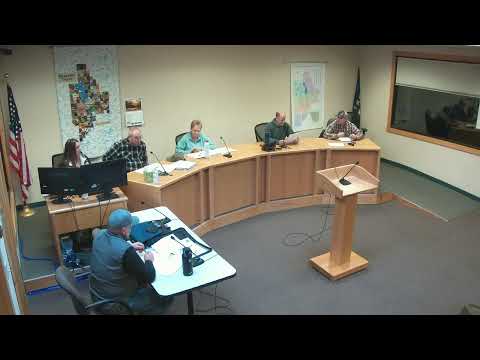
The Broadwater County Solid Waste Advisory Board decided on Tuesday not to close the Raidersburg transfer site after staff presented an analysis showing only modest savings from consolidation.
Staff member (Speaker 4) told the board a round trip from Raidersburg to the transfer station is 48.4 miles and estimated fuel costs at $36.30 per week, or $1,887.60 annually when annualized. Adding porta-potty costs ($115 per month) and a $250 lease pushed the annual incremental total to $2,252.60. "Is $2,200 worth of fight in Toston and Raidersburg?" Speaker 4 asked the board during the discussion.
Board members including Speaker 2 and Speaker 3 said the projected savings did not justify the anticipated community backlash, particularly from Raidersburg residents. Speaker 4 recommended monitoring usage and said, "If they abuse it, I think we revisit this, and we might be able to build a case for that." The board did not take a formal vote because no operational change was adopted.
The discussion also touched on operational details that contributed to the decision: service limitations and the cost of staffing and monitoring remote sites, seasonal volume shifts, and the potential for illegal dumping by outside users. Staff suggested revisiting consolidation in spring if waste volume increases or a transfer-station project changes the economics.
The board directed staff to continue regular monitoring of the sites and report back if conditions change. The advisory board will reassess the question if evidence of abuse or substantially higher savings emerges.