Get Full Government Meeting Transcripts, Videos, & Alerts Forever!
Get email alerts on the Sunshine Public Records topic
No spam. Unsubscribe anytime.
Oviedo city attorney reviews Sunshine Law and public-records duties for Charter Review Committee
Summary
City Attorney Wade Vose told the Charter Review Committee that Florida—s Sunshine Law requires committee meetings to be open and reasonably noticed, and that members—work-related emails and documents may be public records; he urged members to forward public-facing emails to the city clerk for retention.
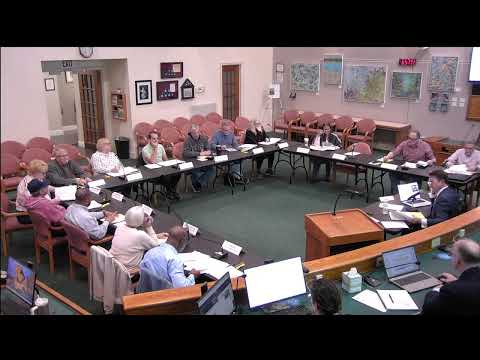
City Attorney Wade Vose on Thursday gave the Oviedo Charter Review Committee a detailed briefing on Florida—s Sunshine Law and the Public Records Act, stressing that the rules apply to both elected bodies and advisory committees that discuss matters likely to come before them.
"The basic idea ... is it provides a right of access to certain types of governmental proceedings," Vose said, summarizing how the Sunshine Law obliges boards to hold open, noticed meetings and to avoid informal deliberations outside of public sessions.
Vose told members that routine conversations and social interactions are usually fine, but communications that approach matters that could foreseeably come before the committee can trigger legal exposure. He warned that knowingly violating the Sunshine Law can be a second-degree misdemeanor and that even unintentional violations can lead to noncriminal fines; courts also may declare actions taken in violation void.
On public records, Vose said materials "made or received by an agency in connection with official business" are subject to inspection, and that committee members themselves are treated as agencies for records created in committee work. He explained that brief personal notes to jog memory are generally not public records, but materials used to formalize or perpetuate knowledge can be.
Vose advised a simple practical step for members: forward any emails from members of the public about Charter Review Committee business to the city clerk so the material is retained in the city—s email system and handled as a public record. "If you get any emails from the public about CRC business... please forward it to the city clerk," he said.
The briefing also included practical reminders about decorum (disruptive behavior can be limited), that members should expect reasonable notice of meetings and that minutes must be promptly recorded and available for inspection. Vose told the committee staff will use conservative practices beyond minimal statutory requirements to make public participation and record retention straightforward.
The committee—s discussion followed Vose—s presentation; members asked clarifying questions about notes, emails, and social-media posts. Vose said staff will provide additional guidance and that members should assume that substantive committee correspondence may be subject to disclosure.