Get Full Government Meeting Transcripts, Videos, & Alerts Forever!
Get email alerts on the Human Services Reform topic
No spam. Unsubscribe anytime.
Adams County raises concerns about state plan to centralize human services; seeks more time and data
Summary
County staff briefed commissioners on a state proposal to centralize some human services (shared services, centralized document scanning, fraud units and district hubs). Commissioners and staff urged the state to extend deadlines, provide detailed fiscal analysis, and ensure resident service quality is preserved.
County human services staff summarized proposed statewide changes from the governor’s office and two state departments: shared tier‑1 call centers, a specialized fraud investigations unit for Medicaid, centralized document scanning (with a current contract referenced for Prowers County), and a district hub model where one county would serve as fiscal and program lead for multiple counties.
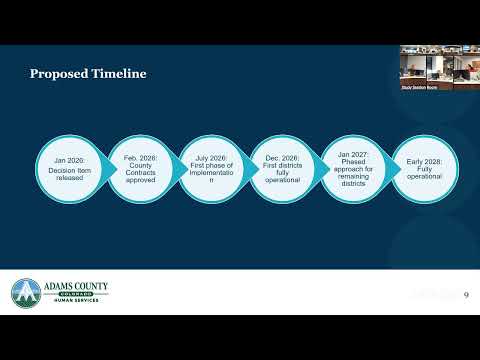
Staff described the proposed timeline as compressed and risky: RFPs and decision items could be released in January with contracts approved in February and initial implementation in July 2026. The staff briefing warned that an aggressive schedule "could lead to delays and benefits for the people who need it most" if technology, training and communication tools are insufficient.
Commissioners and staff flagged fiscal and operational concerns: potential loss of Medicaid incentive funding (staff noted a cut in incentive dollars), the need to understand how shared services would affect county case accuracy and customer access, and the potential for higher error rates during a large transition. County leaders requested the state share its fiscal and performance calculations and asked staff to prepare a concise briefing and a set of asks for legislators, including a request to extend implementation timelines.
County officials also noted the district mapping proposal would assign Adams County as a lead hub for neighboring jurisdictions in the state's draft map; staff said the county was selected because of its fiscal controls and technology capacity but emphasized the "devil in the details" and asked for clarity on workload, resource sharing and subrecipient monitoring.
Next steps: staff will continue discussions with the state, model fiscal impacts, prepare a two‑slide summary of concerns and outstanding questions for the Board to authorize outreach to legislators, and request more time from the state to ensure a safe implementation path.