
House subcommittee hears industry, researchers debate lifetime-income options for 401(k) plans
Get AI-powered insights, summaries, and transcripts
Subscribe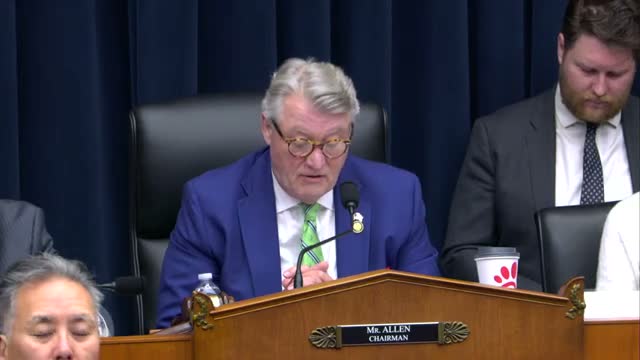
Summary
Witnesses and members discussed proposals for embedding lifetime-income options in defined contribution plans, tradeoffs between guarantees and fees, and the need for consumer guardrails and education; lawmakers signaled bipartisan interest but no formal action was taken.
A House Education and Labor subcommittee on health, employment, labor and pensions held a hearing examining whether defined contribution plans should offer built-in lifetime-income options and what protections would be needed if Congress acts.
The chair opened the session saying the hearing would evaluate “additional and more flexible payout options” for 401(k)-style plans and asked witnesses to explain how those options could offer predictable income while preserving participant choice. Ranking Member DeSaulnier cautioned lawmakers to protect ERISA participants and flagged broader problems—stagnant wages and rising health-care costs—that limit many workers’ ability to save.
Surya Kulluri of the TIAA Institute said research shows a substantial share of households face shortfalls in retirement and urged three policy steps: encourage guaranteed lifetime-income products as default qualified default investment alternatives (QDIAs), require plans to offer a menu of qualified payout options or “coupons,” and expand “longevity literacy” so savers better estimate how long they will need income. Kulluri said his research finds “64% of Americans worry more about running out of money than about their own mortality.”
Ken Levine, an actuary and executive director of global retirement strategy at RTX, described his company’s experience with a lifetime-income strategy the firm adopted as a default option in 2012. Levine said the product preserves account liquidity and only triggers an insurer-backed guaranteed withdrawal benefit if the participant depletes their own account, stressing “there’s no irreversible exchange of assets” in the plan design described to the committee. He and other witnesses said limited take-up by other sponsors stems in part from misperceptions—about demand, fiduciary risk, complexity and cost—and a lack of awareness among plan sponsors.
Nari We, director of the UC Berkeley Labor Center’s Retirement Security Research Program, welcomed interest in lifetime income but pressed for strong guardrails. She noted wealth concentration in retirement accounts—median balances of $8,000 across working-age households and about $20,000 for people aged 55–64—and warned that annuity pricing and guarantees vary widely. “Laws and regulations should protect participants against excessive costs,” she said, urging disclosure standards and actuarial fairness for defaulted products.
Wayne Chapas of the Insured Retirement Institute framed annuities as insurance against outliving savings and described the benefit as steady, predictable “mailbox money” that eases retiree anxiety. He urged policymakers to expand access while working with industry on transparency and affordability.
Committee members probed particulars: what product features participants value (predictability, longevity protection, downside protection and payout flexibility), how to compare fees across options, and whether offering an insurer-backed option as a default would increase litigation risk for sponsors. RTX acknowledged that the insurance-related expense ratio can exceed 1% once guarantees fully take effect in payout phases, but said the fee is offset by a more aggressive asset allocation that can improve net returns.
Lawmakers pressed on scale and equity. Representative Takano asked how many Americans face an annuitization decision; witnesses estimated a minority of workers have large enough balances to make annuitization a practical choice—figures cited in the hearing put that group around 5 million workers with roughly $100,000 or more—while stressing that many Americans have little or no retirement savings and rely mainly on Social Security.
No formal votes or committee actions were taken; the panel recessed for a classified briefing and reconvened before closing. Members accepted several written statements for the record, including from the United Steelworkers, Fiduciary Path, the CFP Board and AARP, and the committee adjourned.
The hearing highlighted a recurring divide: industry and some sponsors tout modern lifetime-income designs that keep assets liquid while offering a backstop guarantee, whereas researchers and some members urged strict guardrails, transparency on fees and limits on defaulting participants into complex annuity structures. Lawmakers signaled bipartisan interest in further legislative or regulatory steps but left substantive choices—how to balance consumer protections with expanded access—unresolved at the hearing.