
Rombout Middle School outlines participation, intervention plans and facility ideas
Get AI-powered insights, summaries, and transcripts
Sign Up Free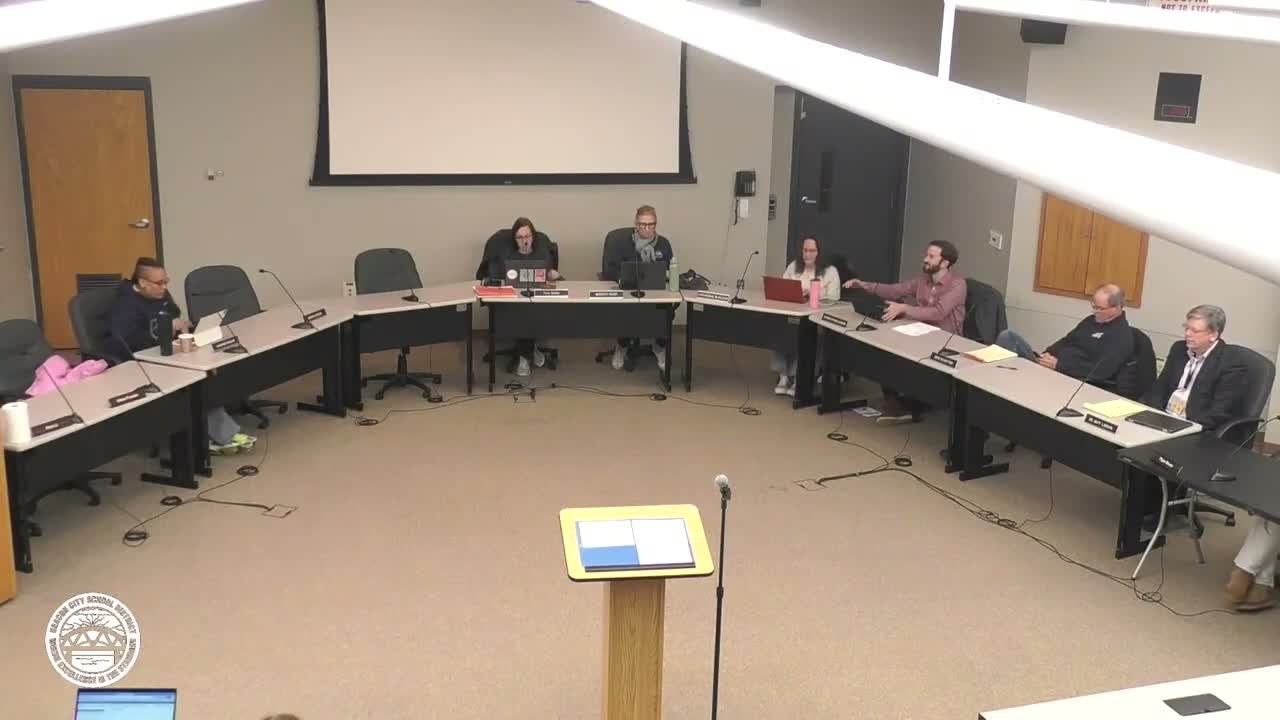
Summary
Principal Soltis told the Beacon City School District board that Rombout Middle School is seeing growth in some advanced classes but remains below state averages in ELA and math; low test participation among middle‑school students drove plans to change opt‑out practices and expand MTSS interventions.
Principal Soltis told the Beacon City School District Board of Education on Monday that Rombout Middle School has added sections in some advanced classes and is "very pleased" with recent enrollments, but that state testing and participation rates remain a concern.
"We do realize that we fall below the state average in those categories," Soltis said, describing gains in ELA and continuing work to raise math performance. She reported 195 students enrolled last year in the middle‑school language credit program, with 179 of those students receiving high‑school credit by the end of the program.
Soltis emphasized that low participation on state assessments distorts proficiency figures and recommended tougher rules on informal opt‑outs. "For a while at Rombout, it has been, you know, an area where students will just opt out or refuse," she said, and explained the school plans to "require students to test and not just to be able to come in with a note to not test."
Assistant principal Amanda summarized the school's MTSS (multi‑tiered system of supports) process, saying teachers and specialists meet twice weekly to review referrals and interventions on a 6–8 week cycle. Amanda gave last year's MTSS counts: 23 total referrals, of which 14 cycled out, two resulted in 504 plans, six were carried over and one required a special‑education referral. She said nine students are currently enrolled in MTSS this year and staff continue to monitor and adjust supports.
The presentation also covered student engagement and extracurriculars: school communications (a Monday message with more than 1,000 viewers), a food drive that collected "over 400 items" for Saint Andrew's food pantry, returning drama productions, and planned field trips to Washington, D.C., and Boston. Soltis thanked the Elks Club for donating $5,000 to a DC scholarship fund and $2,500 to the Boston scholarship fund.
On facilities and program ideas, Soltis proposed adding a grade‑8 wood‑shop tech elective, exploring a nine‑period day to allow students to take mandated electives alongside intervention classes, and installing an agility climbing course in the recess area. She also said the school needs more single‑use restrooms to improve student comfort and access.
Board members praised the classroom video shown during the presentation and asked for mid‑year benchmarking data. One board member suggested the district provide a concise summary of midyear iReady results for comparison. Soltis said the first midyear benchmark is in February and the school will provide a summary to the board.
The board did not take formal action on the presentation; Soltis said the purpose was informational and for the board to provide feedback and questions about program and facility priorities.
The next steps are for the school to finalize midyear benchmarking reports and for the board to discuss facility or schedule proposals during upcoming budget and committee meetings.