Get Full Government Meeting Transcripts, Videos, & Alerts Forever!
Get email alerts on the Policing Privacy topic
No spam. Unsubscribe anytime.
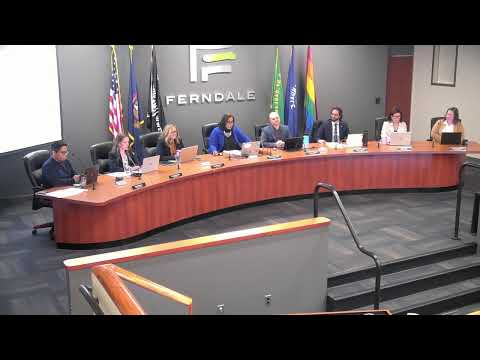
Ferndale residents urge council to reject automatic license‑plate readers over privacy concerns
Summary
Several residents told the Ferndale City Council they oppose proposed automatic license‑plate reader (ALPR) cameras, calling them constitutionally dubious and warning the devices would chill daily life and local business; the council did not vote on the technology at the meeting.
At a Ferndale City Council meeting, multiple residents urged elected leaders to reject proposed automatic license‑plate reader (ALPR) cameras, saying the devices pose serious Fourth Amendment and privacy risks.
Otto Massey (281 West Maplehurst) told the council the debate on ALPRs is “not inherently an issue of company choice, funding, or regulation” but “one of fundamental freedom and community expectations,” and said warrantless, digitized surveillance could allow government tracking of people’s movements. "Because the average person does not expect to be surveilled in public," Massey said, "their warrantless surveillance is constitutionally dubious." Nicole Massey (281 West Maplehurst) warned that visible surveillance could deter people from visiting local businesses and called the proposal “Orwellian.”
The speakers referenced two providers discussed in recent deliberations — Flock (previously considered) and Axon — and some commenters noted the mayor pro tem had explained a prior vote to cancel an agreement with Flock. No formal council action on ALPRs was taken at this meeting; public comment on the topic occurred during the public‑comment period and opponents urged the council to remove any cameras from consideration.
Why it matters: ALPR systems collect and retain location data tied to plates; residents said that even without facial recognition the data archive could be used to track associations and movements over time. Several speakers framed privacy protections as a fundamental right that should not be deferred to shifting corporate or political decisions.
What happened next: After public comment closed, the council moved on to its regular agenda. The record shows strong public opposition but no vote or formal policy change on ALPRs at this meeting. Further consideration of policing technology would require an agenda item or formal council action at a future meeting.