Get Full Government Meeting Transcripts, Videos, & Alerts Forever!
Get email alerts on the High School Credit Policy topic
No spam. Unsubscribe anytime.
Policy committee advances consolidated high-school credit policy, debates 20-vs-26 credits and single diploma
Summary
Committee members reviewed a draft consolidated policy (IK) that folds multiple older policies into one, discussed how competency-based credit will interact with the state's 20-credit minimum, and debated whether the district should issue a single diploma or preserve tiered diploma titles.
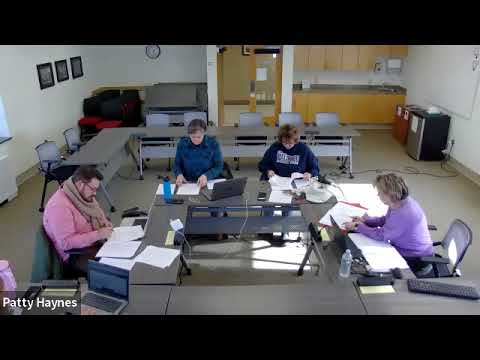
A school board policy committee on an internal review of high-school credit recommended moving forward with a consolidated policy called IK while flagging several implementation and clarity issues.
The draft IK folds older policies (listed in the meeting memo) into a single high-school credit policy intended to streamline language and align board policy with state rules. "In the memo, IK is taking the place of or incorporating IKAA, ILBAA and IMBC," one committee member said, summarizing the consolidation noted in the staff memo. Members discussed rescinding the older policies because their provisions would be incorporated into IK.
Committee members focused on two technical questions: how the policy defines interdisciplinary credit and how competency-based credit maps onto the state requirement that a high-school diploma be based on at least 20 credits. One member proposed a focused definition: "interdisciplinary means across disciplines or domains," and recommended moving an explanatory sentence into the definitions section so readers can find it quickly.
Members also examined the tension between counting seat-time credits and recognizing competencies. Staff explained competency-based earning will begin with the incoming ninth grade and requires a school-level curriculum crosswalk: "the credit is based on the course" but the curriculum must ensure required competencies are covered, a presenter said. The committee discussed whether interdisciplinary work could be counted toward two subject areas; one member summarized the concern succinctly: "what this is trying to say is that, you know, one credit can't be two credits."
The committee debated diploma naming as a policy choice. State rule cites a 20-credit minimum for a regular high-school diploma; the draft offers an option to award a single uniform district diploma for any student who meets the minimum. Proponents said a single diploma reduces competitive ranking while the transcript would still record exact credit totals. Critics worried lowering a 26-credit expectation to 20 could reduce rigor: "I just think it's a shame to see the standards because this is... reducing rigor in terms of what's required to get a diploma," a member said.
The draft assigns implementation responsibility to the superintendent, in consultation with high-school principals and curriculum coordinators, to establish approval, supervision and monitoring procedures for individual learning opportunities and plans. Committee members agreed to present IK as a first reading with edits (including moving a definition into the definitions section and clarifying interdisciplinary counting) and to circulate a redlined version for the next meeting.
Next steps: staff will provide a strikeout/redline version alongside a New Hampshire School Board sample policy for comparison; the committee will solicit additional feedback — including from school principals and parent groups — before a second reading.