Douglas County proposes 3‑month limit for able‑bodied general assistance, raises shelter cap to $850
Loading...
Summary
Douglas County Health and Human Services staff proposed tightening General Assistance eligibility by limiting able‑bodied recipients to three months of aid annually and increasing the shelter cap from $800 to $850; staff said budget limits and rising rent costs motivated the changes and a public hearing is set for Dec. 2.
Douglas County officials laid out proposed changes to the county’s General Assistance guidelines on Thursday, recommending a three‑month annual time limit for applicants deemed medically able to work and a modest increase in monthly shelter assistance to $850.
Melissa Sewick, director of Douglas County General Assistance, told the Health and Human Services Committee the review is state‑mandated and intended to align benefits with program intent and fiscal reality. “Every two years, the Douglas County Department of General Assistance has a biannual guideline review,” Sewick said, and added that the department will hold a public hearing on Dec. 2 to collect feedback before returning a final draft to the board.
Sewick said the department currently caps shelter assistance at $800 per month and is proposing a 6.25% increase to $850 to better approach fair‑market rents while recognizing budget constraints. “The fair market rent for an efficiency unit in Douglas County is $990,” she said, but added the county’s budget does not allow matching that level.
The proposal would distinguish between applicants who are medically unable to work and those who are not. People the department determines are medically unable to work — including some people with serious mental‑health conditions or substance‑use disorders when documented by a medical professional — would remain eligible for ongoing assistance while pursuing Social Security benefits. Sewick said medical professionals provide a statement estimating the disability’s expected duration and that staff would continue to assist those applicants as they apply for Social Security.
By contrast, under the proposal people deemed medically able to work would be limited to a maximum of three months of General Assistance per year, intended to prioritize short‑term crisis stabilization, Sewick said.
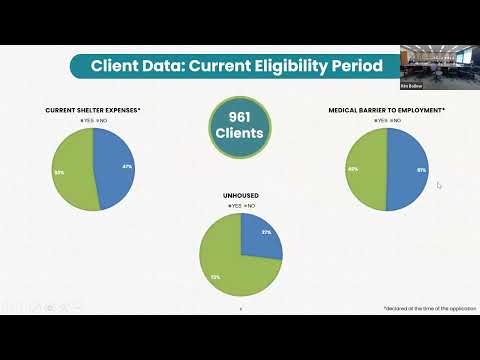
Committee members pressed officials on the possible consequences of time limits. Commissioner Mary Anne Borgeson asked how many people currently receive assistance for longer than three months; Sewick replied that a majority do, and that October voucher data showed 451 unique clients received shelter assistance in that month alone. “I would say probably 99.9% of them will receive more than three months of assistance,” Sewick said when estimating long‑term voucher use.
Borgeson and other commissioners warned that applying a strict time limit during a period of high need could risk pushing people into homelessness. “I guess I'm just a little bit nervous that we are going to be, setting, folks into the streets,” Borgeson said, urging staff and the board to consider phased or alternative approaches.
Sewick described the fiscal pressures that prompted the proposal: rent is the largest program expense, recent six‑year trends show rising costs, and as of Nov. 1 the department’s rent line item was 6.7% over budget. In October Douglas County distributed nearly $285,000 in shelter assistance; average rental payments were $636.80 and average utility payments were about $57.70.
Committee members also raised operational questions: whether applicants are referred to SOAR or legal aid to expedite Social Security applications, and how the department verifies income when clients use nontraditional payment platforms. Sewick said some clients receive SOAR help and others are referred to legal aid, but wait lists mean not everyone gets expedited assistance. She said the department checks earnings through the Department of Labor and requires monthly reporting forms, but cannot reliably verify some digital payment accounts.
Questions about move‑in costs prompted Sewick to point to community partnerships: the department operates a weekly housing clinic and refers clients to partners such as Sienna Francis House for deposits or application help, but said the department itself does not directly fund application fees or deposits.
Sewick said staff posted the proposed guidelines at county offices, libraries and partner sites and had solicited landlord and nonprofit feedback; she reported the department received about six public comments so far. The committee was told the department will accept additional input at the Dec. 2 hearing and tentatively return a final draft to the full board for consideration on Dec. 16.
With no formal vote taken, the committee left the proposal open for further review and public comment. The public hearing is scheduled for Dec. 2, and staff will bring any revisions to the board for potential action on Dec. 16.