Get Full Government Meeting Transcripts, Videos, & Alerts Forever!
Get email alerts on the Solar Power Plant topic
No spam. Unsubscribe anytime.
Planning commission approves conservancy rezoning and conditional-use permit for proposed Wisconsin Rapids solar array, adds water-monitoring condition
Summary
The Wisconsin Rapids Planning Commission rezoned two city-owned parcels to C-1 Conservancy and approved a conditional-use permit for a proposed solar plant with added water-monitoring and staff conditions, despite strong neighborhood opposition concerned about wellhead protection and property impacts. The rezoning passed 7–0; the conditional-use permit passed 5–2 and still requires finance committee and council action on project financing and contracts.
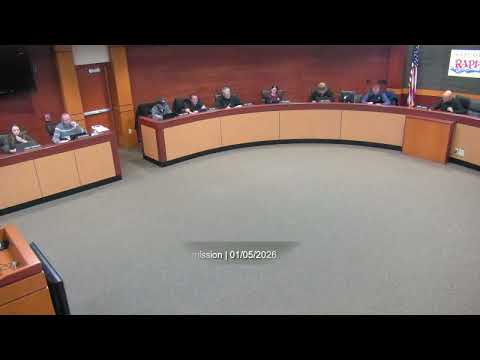
The Wisconsin Rapids Planning Commission voted to rezone two city-owned parcels at 2211 Whitrock Avenue and 2520 2 Mile Avenue to a C‑1 Conservancy classification and granted a conditional‑use permit for a proposed solar power plant, attaching staff conditions and a requirement for third‑party water monitoring.
The meeting on the action drew extensive public comment from nearby residents who raised concerns about wellhead protection, tree removal, visibility from homes and long‑term maintenance. “I think it's a foolish idea to do a solar plant,” said Heidi Sorensen, who owns property on 23112 Mile Avenue and questioned solar generation in a northern climate. Commissioners repeatedly framed the zoning change as a protective measure for the wellhead areas independent of whether the solar project proceeds.
City staff and the utility presented the project as designed to limit risks and provide community benefit. Todd Wyler, general manager of Wisconsin Rapids Water and Light, said rezoning to conservancy “protects the wells and the water supply” regardless of whether a solar array is ultimately built, and described plans for prairie‑grass planting around the array and a roughly 150‑foot tree border intended to screen views from nearby homes. Stanley Minnick of 1 Energy Renewables said project designs will use FR3 soy‑based fluid in transformers and crystalline panels rather than thin‑film technologies, and that the company is prepared to work with the city on contract details and monitoring. Minnick said the array is expected to produce on the order of 10,000,000 kilowatt‑hours per year—roughly the annual consumption of about 1,300 Wisconsin homes.
Commission discussion focused on water‑quality monitoring, decommissioning securities and whether rezoning would lock the city into the project. Kearns, the city’s director of community development, noted the conservancy classification “limits the amount of uses within that district” and that a conditional‑use permit could include a groundwater‑testing requirement. Minnick said if monitoring is made a condition of the permit, “we'll either accommodate that or … the project would stop,” indicating willingness to include third‑party testing if required.
Utility staff also presented a financial outlook: Wyler said an initial analysis using 2024 cost assumptions produced a $6 million 30‑year savings estimate for the utility, and an updated projection that accounted for escalations in wheeling and demand costs yielded a $17 million figure. Officials emphasized that residents are unlikely to see sizeable immediate bill reductions; the utility framed the array as a hedge against future cost increases, particularly for large and industrial customers.
After debate the commission approved rezoning to C‑1 Conservancy by voice vote, 7–0. On the conditional‑use permit, commissioners added a condition calling for additional water monitoring tied to a research opportunity with the developer; the permit passed on a roll call vote, 5–2. The commission’s action is a recommendation that still requires council consideration and a separate finance/property committee decision about contract approval and funding. Chair Matt Zacher noted the city had signed a letter of intent and that council‑level action and any contract decision will be considered in January under federal incentive timelines.
Next steps: the conditional‑use approval will be forwarded to the common council and the finance and property committee for votes on whether to proceed with project financing and a developer contract. The developer and utility said they would provide requested contract details and are willing to work with the city on specific groundwater monitoring language if that condition is required.