Get Full Government Meeting Transcripts, Videos, & Alerts Forever!
Get email alerts on the County Health Insurance topic
No spam. Unsubscribe anytime.
Scotts Bluff County insurance committee recommends Aplos-managed plan; board to vote at later meeting
Summary
Scotts Bluff County commissioners heard a presentation from Alliance Insurance and Aplos describing a self-funded plan design the firms say could cut provider and pharmacy costs; the insurance committee recommended proceeding and the board scheduled a formal vote at the 04:30 meeting. (Date not specified in the transcript.)
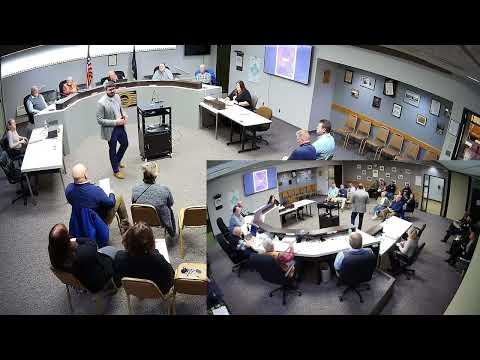
Scotts Bluff County commissioners on the board's meeting heard a presentation from Alliance Insurance Services and Aplos proposing a shift to an Aplos-managed self-funded health plan intended to reduce the county's employee health-care costs while maintaining coverage. Lisa Charlotte Kim, county staff, introduced the vendors and said the insurance committee has recommended the board advance the proposal to the upcoming 04:30 meeting for a formal vote.
Ian, an Alliance Insurance Services representative who led the presentation, said the county's current self-funded plan has been trending toward significant overspending and that without change projections suggested it "was gonna be about 1,000,000 over budget" in a worst-case scenario. The Aplos presenters described a procurement and care-management model they said produces substantially larger discounts from providers and pharmacies than the county currently receives.
BJ, an Aplos presenter, said the company achieves steeper provider discounts and an aggressive pharmacy sourcing strategy for high-cost drugs. The presenters gave an example in which a cited infusion that local providers billed at about $138,000 every six weeks could be managed through Aplos's sourcing and home-infusion arrangements for roughly $13,000, reducing facility fees and lowering plan dollars paid. "We're looking at cranking that up 5 times, getting 5 times a decision to, again, hopefully, bring in lower cost this year," one presenter said when discussing discounts and procurement.
Presenters also described plan design and member experience features: an open-access provider network powered by Pharos/Acunet with a provider search; a single local/Midwest-based member-service phone line; telemedicine and behavioral-health access via an app; mailed specialty drug fills for costly prescriptions; and a benefit-administration portal and one-on-one licensed advisor appointments during open enrollment. They said drugs priced above $300 would be handled through special procurement and, in many cases, be available to employees at no out-of-pocket cost.
On coverage concerns, Aplos representatives said federal and state rules prevent exclusions for preexisting conditions and that employees currently receiving treatment would be contacted and managed through a transition-of-care process before an effective date, if the board approves. Presenters explained stop-loss mechanics described in the meeting: a specific claim-level deductible (noted in the transcript as $80,000) and an aggregate deductible (noted as $1,000,000) under the county's stop-loss coverage; Nationwide was cited in the presentation as the stop-loss carrier in context of existing arrangements.
Commissioners asked technical questions about claims timing, transition-of-care reports, home infusion safety, and whether the county's plan design or employee premiums would change. Presenters said the plan design would remain largely the same "as it was last year" and that premiums were not being changed at that point; they emphasized the proposal focuses on lowering plan costs by targeting high-cost claimants and specialty drug procurement while maintaining access to care.
The insurance committee members who reviewed the proposal described the product as competitive and recommended the board proceed. County staff told the board the insurance proposal is placed on the 04:30 meeting agenda for a formal vote; if approved, open enrollment and virtual advisor appointments would begin about two weeks later to prepare for a January 1 effective date. The board did not take a final vote on the insurance proposal during this session.
The transcript does not include a meeting date. The transcript also contains inconsistent spellings for one commissioner's name (appearing as "Riesling" during roll call and later as "Reisig"); the article uses the names exactly as they appear in the record when reporting roll-call outcomes and notes the discrepancy for clarity.
What happens next: the insurance proposal will be considered for formal approval at a separate 04:30 meeting; if the board approves it, the vendors plan to begin employee outreach and enrollments ahead of a January 1 effective date.