Get Full Government Meeting Transcripts, Videos, & Alerts Forever!
Get email alerts on the Archaeology And Development topic
No spam. Unsubscribe anytime.
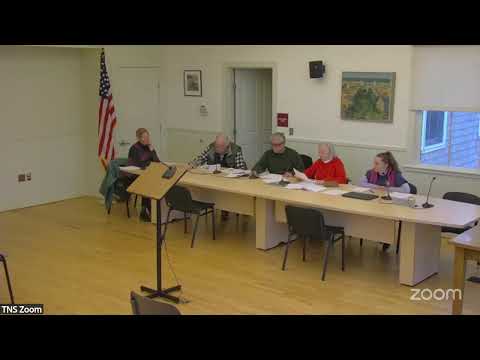
Commission backs Bayberry Hill single‑family project with archaeological protections noted
Summary
The commission unanimously issued a positive advisory for Bayberry Hill LLC’s two‑building single‑family project, noting prior CRMC/DEM approvals, a conservation easement limiting development, and a negotiated protection plan with the Narragansett Indian Tribe for sensitive archaeological areas; the commission requested written documentation of the protection plan.
The New Shoreham Conservation Commission voted to issue a positive advisory for Bayberry Hill LLC’s proposed single‑family dwelling and accessory structure (Plat 4, Lot 45), while commending steps taken to identify and protect archaeological resources on the 12‑acre site.
Attorney Matthew Wade representing the applicant said the project has an extensive permitting history: prior CRMC approval, DEM approval of the OWTS, building permits issued and updated (including a February 2024 permit), and construction that began on pilings. He said the site is largely constrained by a conservation easement that limits development to roughly one‑tenth of the parcel and that the design had been reworked to reduce massing and comply with conservation parameters. "This is a large site. It's about 12 acres, and there's about a tenth of the property that usually developed because of that conservation easement," Wade said.
Commissioners focused on archaeology and potential human remains. The meeting record shows prior archaeological work and a recommendation by Kevin McBride for a data‑recovery mitigation program; Wade said archaeologists mapped sensitive areas, the Narragansett Indian Tribe participated in oversight, and a negotiated protection plan with tribal preservation officers was in place. "They went through great lengths to ensure that any sensitive areas were preserved and not disturbed and negotiated a protection plan with Narragansett Indian tribe," Wade said. The commission asked the applicant to provide any written protection plan and related documentation to the town; Wade agreed to provide the materials.
The commission moved a positive advisory with a commendation for steps taken to protect archaeological heritage and a recommendation that mitigation and tribal oversight continue; the motion was seconded and adopted by voice vote. Next steps: the applicant will provide the protection‑plan documentation to the commission and proceed with CRMC review that will include state‑level reexamination of archaeological and preservation concerns.