Get Full Government Meeting Transcripts, Videos, & Alerts Forever!
Get email alerts on the Surveillance Privacy topic
No spam. Unsubscribe anytime.
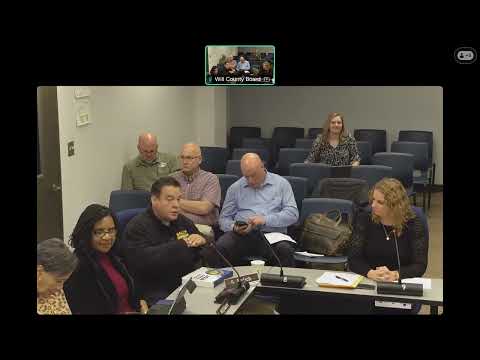
Will County committee postpones vote on Illinois State Police license‑plate reader agreement after privacy concerns
Summary
After public testimony from an Illinois State Police master sergeant, the Will County Transportation Committee postponed consideration of an intergovernmental agreement allowing license‑plate reader cameras on county highways to the next meeting to allow follow‑up on data‑sharing and retention questions.
The Will County Transportation Committee postponed consideration of an intergovernmental agreement with the Illinois State Police that would permit placement of license‑plate reader (LPR) cameras on county highways, saying members need more detail on data sharing, retention and oversight.
Master Sergeant Lisa Amberg of the Illinois State Police told the committee she serves as the state’s license‑plate reader camera coordinator and that "we have 757 throughout Illinois, and already 18 in Will County." Amberg said the cameras planned for the I‑55/Weber Road parapet wall would require a county permit and the proposed IGA before the county issues that permit; she also said ISP uses Motorola cameras and that ISP "own[s] our own data."
Committee members pressed her on who could access the data, how long non‑hit license plate reads would be retained and whether federal or private vendors could receive data. Member Kelly Hickey said she supported cameras for Amber and Silver Alerts but asked whether the IGA’s retention language and sharing rules would expose ordinary motorists to unreasonable surveillance. Hickey noted the IGA references a 120‑day deletion standard but Amberg said ISP operational practice is to purge detection‑level data at 90 days and that changing retention would require broader, system‑wide agreement.
Member Steve Balich expressed privacy and mission‑creep concerns and moved to postpone consideration of the IGA for one month so the committee could seek clarifications and possible negotiation on retention and access. "I don't want the government to know where I'm at and how I go places," Balich said during public discussion. Member Axley seconded the motion. After further discussion about whether the county’s attorneys could require changes, the committee voted to postpone the IGA to the next meeting.
State’s Attorney staff told the committee they had reviewed the draft IGA and found it legally sufficient but cautioned that unilateral local changes to statewide data practices would be difficult without the state police agreeing to system‑wide alterations. Amberg told the committee that ISP keeps its own policies and MOUs in place and that investigators may need multi‑day retention windows to follow up on delayed reports or leads.
The committee’s postponement means the IGA will return to committee staff and members for follow‑up questions about retention periods, the exact sharing rules with other agencies and whether county‑specific conditions can be negotiated before the matter goes to the full board.