Get Full Government Meeting Transcripts, Videos, & Alerts Forever!
Get email alerts on the Climate Workplan topic
No spam. Unsubscribe anytime.
Carbondale staff shares 2026 climate work plan, plans GHG inventory and efficiency pilot
Summary
Staff presented a draft 2026 work plan that focuses on updating the municipal greenhouse‑gas inventory using 2024 data, retooling a heat‑pump rebate into a broader efficiency fund with about $94,000 available, and pursuing a Colorado Energy Office e‑bike grant for lower‑income households.
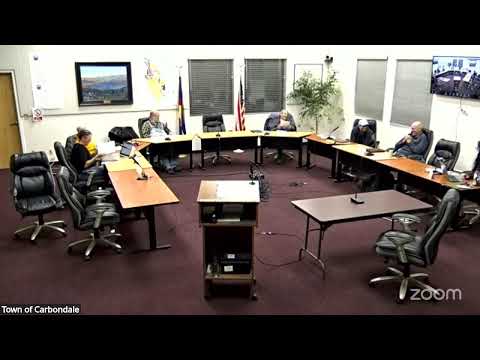
At the meeting the environmental board reviewed a draft 2026 work plan and a summary of 2025 work. Claire (staff presenter) outlined near‑term priorities: completing an updated municipal greenhouse‑gas inventory using 2024 utility data; reconsidering a previously conceived heat‑pump rebate fund as a broader "efficiency fund" because the original revenue source is not a reliable, replenishing stream; and applying for a Colorado Energy Office grant to support an e‑bike ownership program for households at or below 80% of area median income.
"We're currently running the numbers on a municipal inventory," Claire said, noting staff will run the inventory using 2024 data early in the year and aim for a two‑year update cycle thereafter so the town can refresh its Energy and Climate Action Plan, which dates to 2017. Claire said the board should help design community outreach tied to the inventory and recommended an initial community engagement push in 2026.
On rebates and incentives, Claire explained the heat pump rebate line comes from the town's energy efficient building fund and that approximately $94,000 of one‑time funding is available now; staff are considering repurposing it for a broader set of efficiency rebates (including mini‑split heat pumps) rather than a single, large heat pump rebate program. The work plan also describes piloting a voluntary, no‑cost residential energy self‑assessment program for new water customers to help identify good candidates for efficiency upgrades.
Board members asked technical and implementation questions (including whether mini‑split systems would be eligible under the rebates and how to sequence charger infrastructure and transit for low‑carbon fleet choices). Claire said the e‑bike grant would support an ownership model where a qualifying household pays a small fee (around $150) to receive a bike, and that she will share more details as the grant application proceeds.
The board signaled support for the GHG inventory update and discussed using the inventory to identify low‑cost, high‑impact opportunities ("low‑hanging fruit") for emissions reductions and program prioritization in 2026 and 2027.