Get Full Government Meeting Transcripts, Videos, & Alerts Forever!
Get email alerts on the Public Transit topic
No spam. Unsubscribe anytime.
Tri City Roadrunner warns of service cuts after federal funding drop
Summary
Tri City Roadrunner's manager told the Scotts Bluff County board that a reduction in federal operating aid could force incremental service reductions, including shorter flex-route hours, limits on demand-response trips and staff-hour cuts; public hearings under Title VI will be required if service drops exceed 10%.
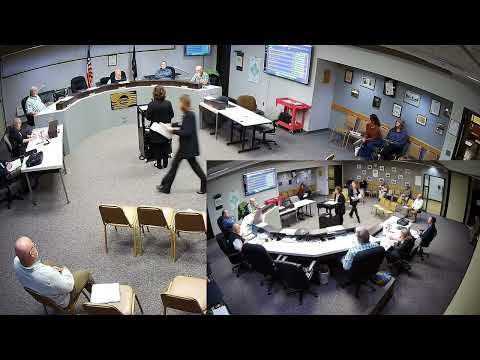
Tri City Roadrunner's manager, Kurt, told the Scotts Bluff County Board of Commissioners that a significant reduction in federal operating assistance has forced the agency to plan incremental service cuts to avoid a complete shutdown.
Kurt said the agency carried 45,203 trips last year, a roughly 20% year-over-year increase, and that projected federal changes and budget shortfalls could eliminate a substantial portion of operating funds. "If we don't do something quickly, a shutdown is inevitable," he told the board, outlining options to scale back service while the agency seeks alternative funding.
His short-term plan includes trimming flex-route hours (a proposal to shift service windows from roughly 06:30'0:30 to 07:30'04:30), limiting the number of demand-response vehicles in service, eliminating overtime and reducing some full-time staff hours to 37.5 per week. Kurt said some staffing and route reductions can be implemented without a public hearing, but reductions over 10% trigger Title VI procedures: public notice, translated materials (Spanish where required), an initial public hearing published 14'1 days prior and a second notice 5—2 days prior to action, plus a 10-day comment period that must be forwarded to NDOT's civil rights office for review.
Kurt told commissioners he is seeking short-term economies and pursuing outreach to federal and state lawmakers and the association manager to find additional funding. He characterized the situation as urgent but said his preference is incremental changes and continued efforts to identify new revenue sources rather than an immediate, large-scale cut.
Commissioners expressed support for Kurt's work, noted the service's expansion in recent years and urged outreach to the federal delegation and state partners. No formal board action was taken; the board and transit manager agreed to pursue funding contacts and to schedule required public hearings if needed.
Kurt indicated the agency will monitor month-to-month numbers and pursue grants that may be available to nonprofit or local operators. He emphasized that legally the system cannot prioritize medical trips exclusively if service reductions are implemented without following Title VI procedures.
The board directed staff to help coordinate outreach to congressional offices and to continue monitoring the transit agency's budget and operations. Kurt asked the county for assistance with public-notice timing to meet the Title VI hearing requirements.