Students, staff and parents describe reading and family‑engagement strategies as part of Edmonson Elementary improvement plan
Summary
Edmonson Elementary staff and students presented a Unified Improvement Plan that targets literacy, multilingual supports and school culture. Student projects such as 'Blackout Bingo' and reading logs were highlighted as tools to increase out‑of‑class reading and family engagement.
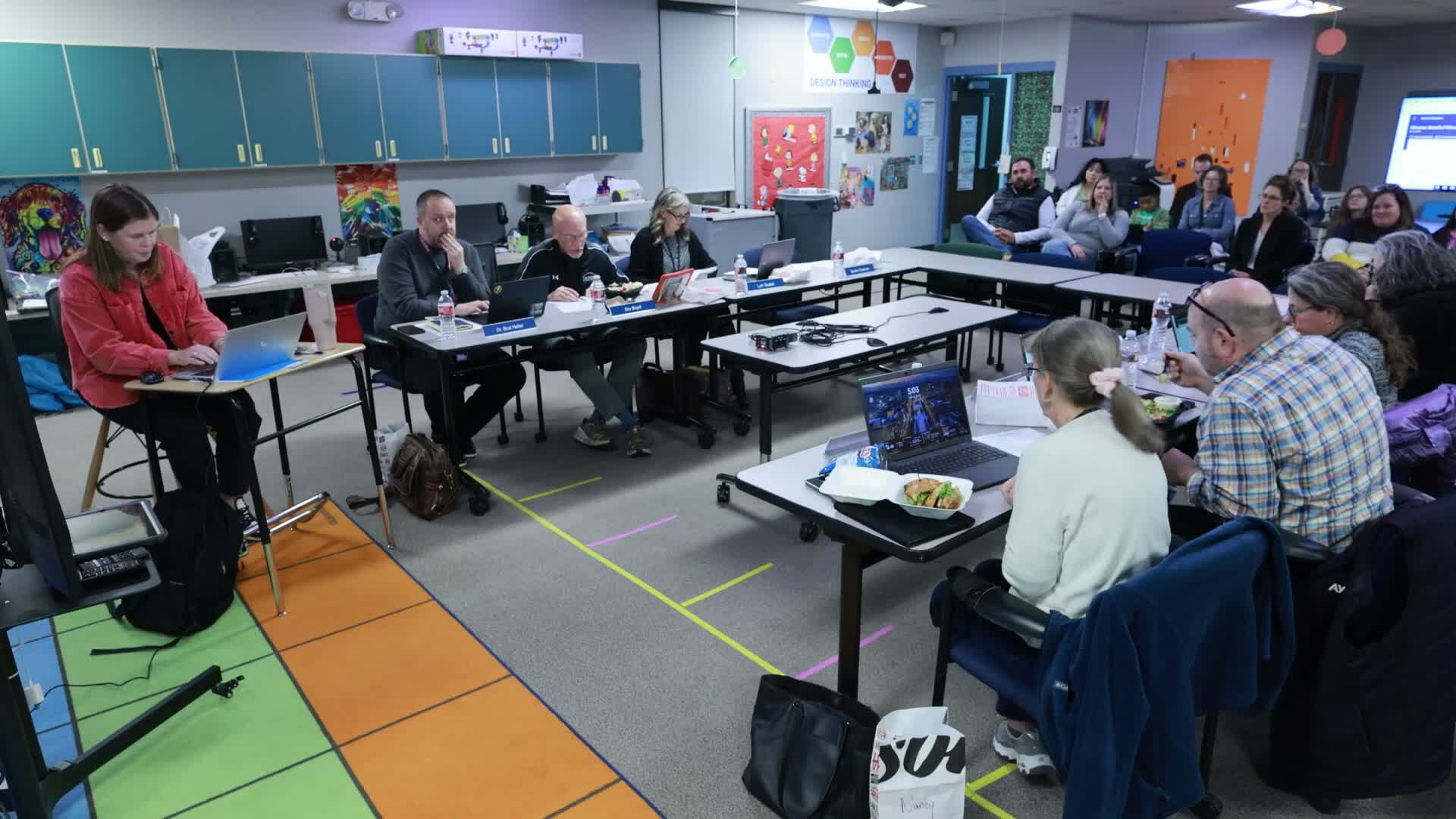
Edmonson Elementary presented its school Unified Improvement Plan to the Thompson School District R‑2J board, outlining a combination of curriculum changes, professional development and family‑engagement efforts aimed at improving literacy and student perceptions of school safety. "I am Dr. Carmen Polka. I'm the executive director of elementary and early childhood schools," Dr. Polka said when introducing school staff and students.
Students described 'Blackout Bingo' and a weekly reading‑log routine that encourages time spent reading with family. "Blackout Bingo...has some math activities, reading activities," one student said, and teachers reported recognizing top readers during assemblies. Principal and staff presenters cited measurable reading minutes for top students through November, noting one student had logged "about 2,220 minutes," roughly 37 hours.
In the UIP presentation, staff said Edmonson had been moved from an initial turnaround designation to 'priority improvement' after a state reconsideration but still faces academic achievement and growth gaps. The school identified root causes including a lack of a guaranteed, viable literacy curriculum and inconsistent professional learning team practices. To address multilingual learners, staff said they recently provided professional development on SIOP (Sheltered Instruction Observation Protocol) and adopted benchmark literacy materials paired with multilingual supports.
Board members asked about federal Title funding and its stability; presenters explained Title I typically funds personnel (about 80% of the allocation) and outreach/PD (roughly 20%), and that carryover funds received in December would be used for collaborative after‑hours PD and benchmark curriculum rollout. A parent, Marla Cruz, told the board that bilingual pamphlets and Spanish/English books were effective at increasing her family's engagement, and that providing translators at PTA events brought more Spanish‑speaking parents into school activities.
The board did not take a vote on the UIP at this study session; staff said the plan would be returned to the board for approval at the next meeting and then submitted to the Colorado Department of Education if approved.