
Brandywine board accepts final 2025–26 budget amid enrollment decline, tuition-tax pressures
Get AI-powered insights, summaries, and transcripts
Sign Up Free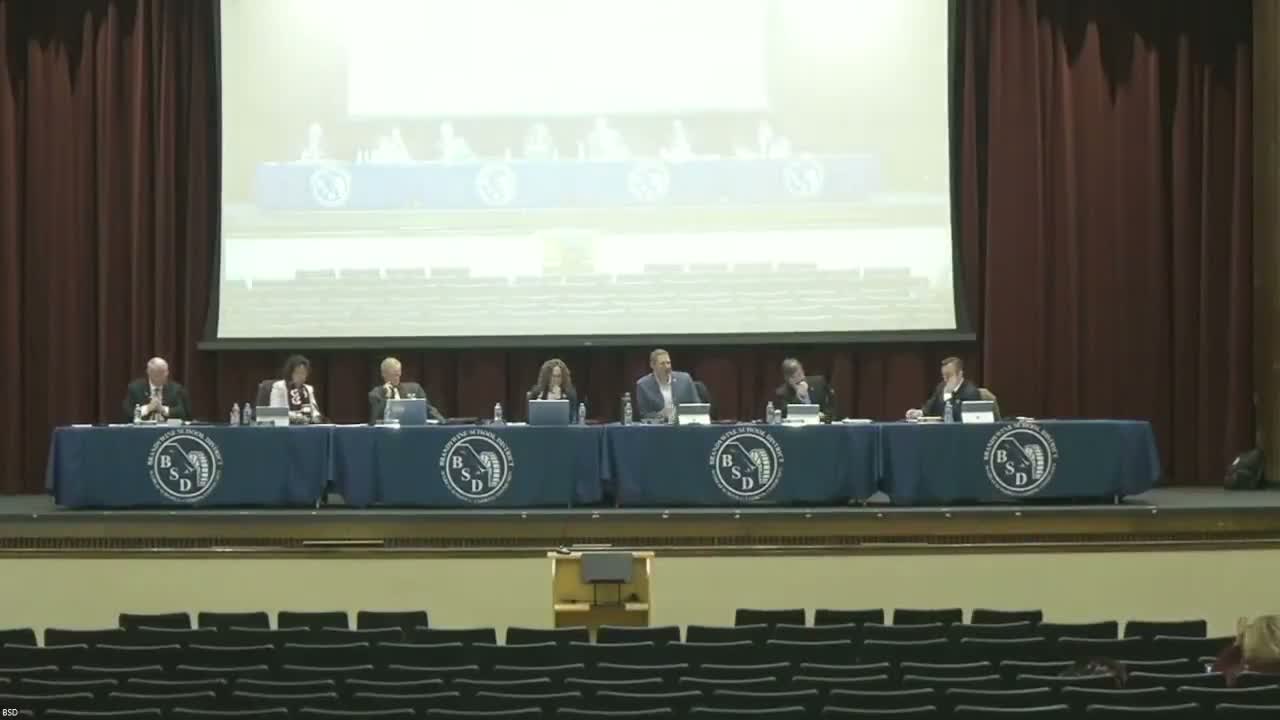
Summary
The board voted to accept the 2025–26 final budget after a presentation showing an unexpected enrollment decline of 279 students, projected tuition-tax overspending of $1.5 million, and a projected 06/30/2026 local fund balance of about $8.9 million; trustees discussed appeals from a county reassessment and capital needs.
The Brandywine School District Board of Education voted to accept the 2025–26 final budget after hearing a detailed presentation from Mr. McCoy that outlined shortfalls, enrollment shifts and ongoing budget pressures.
Mr. McCoy said the district experienced an unexpected enrollment decline of 279 students, equating to a reduction of about 11.48 teacher units and resulting in lower state funding tied to unit counts. He also reported assessment growth tied to a county reassessment that added about $123 million to the district tax base for the remaining six months (approximately $246 million on a full-year basis), and noted 153 of 667 assessment appeals have been settled to date (resulting in an assessed-value loss of $9.1 million) with 521 appeals still open.
Tuition-tax funds — the portion of the levy earmarked to support students with intensive or complex needs — are being overspent, McCoy said. The budget projects a $1.5 million overspend for tuition-tax-funded services this year, which could deplete tuition-tax reserves and require using local current-expense funds to cover special-education costs in future years. He cautioned that the district may need to identify efficiencies because some costs used to meet individualized education program (IEP) requirements are one-to-one services that can be costly.
Despite those pressures, Mr. McCoy presented a projected local-fund balance of $8,893,000 as of June 30, 2026, which is close to the district’s earlier goal of $8.8 million. He also reported that $14,000,000 of state funds have been temporarily used to cover cash-flow shortages tied to delayed tax receipts; those funds are expected to be repaid when tax revenues arrive.
Board members asked about long-term capital needs (including deferred maintenance) and whether tax-rate adjustments are possible to offset appeal losses; staff said state code limits adjustments following appeal cycles and the district may not have authority to reset rates to achieve revenue neutrality beyond the immediate reassessment year. Trustees discussed the implications of a changing funding formula under the Public Education Funding Commission, but noted that any formula changes would require General Assembly action.
Motion and vote: Mister Ackerman moved to accept the final budget; Mister Lavoie seconded. The board approved the motion by voice vote with 'Aye' and no recorded opposition.
What’s next: District staff said they will continue to monitor tuition-tax spending and appeals, examine special-education cost drivers for efficiencies where legally permissible, and include these factors when setting tax rates and the next budget.