
Will County committee backs engineering study for fourth RNG compressor after staff cites $720,000 equipment price and ~3–5 year ROI
Get AI-powered insights, summaries, and transcripts
Sign Up Free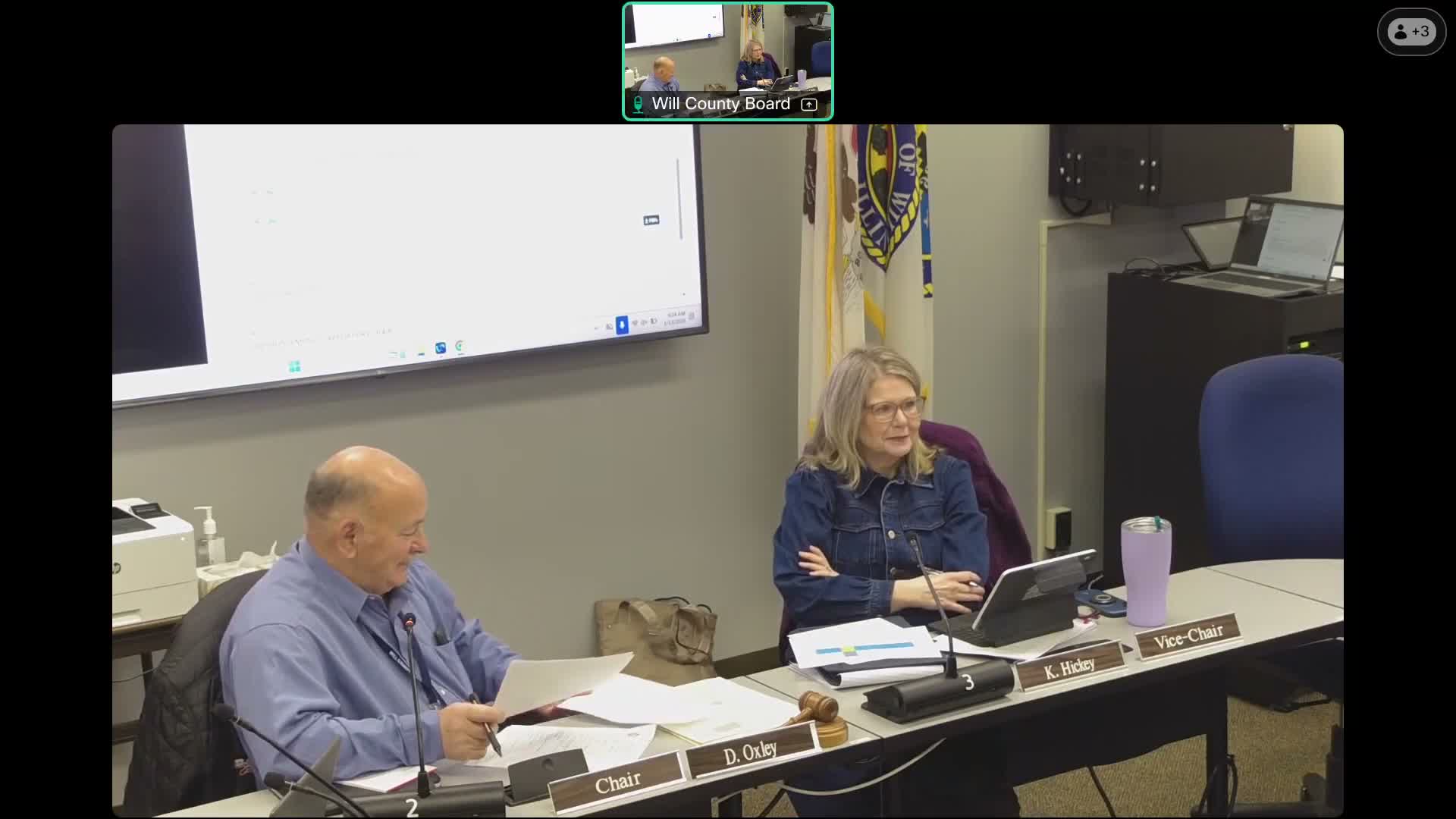
Summary
After staff outlined plant downtime causes and estimated a $720,000 compressor price (about $1.8 million installed), the landfill committee voted to advance engineering-level cost estimates to determine precise procurement and budget options for adding a fourth feed compressor to the county RNG plant.
Will County landfill staff recommended the county pursue engineering‑level cost estimates for a fourth feed compressor at the county RNG plant after presenting outage causes, lost‑revenue estimates and an equipment cost breakdown.
Staff said feed compressors are the largest single cause of unplanned outages (about 30–35% of downtime). They reported a manufacturer equipment price of $720,000 for the compressor unit, roughly $700,000 in mechanical and electrical installation costs, $46,000 for engineering, controls/instrumentation and a 20% contingency that together bring the all‑in estimate to about $1.8 million. Staff summarized the projected return on investment as “somewhere around between 3 to 5 years.”
During prolonged outages, staff said the plant cannot operate with fewer than two feed compressors; the committee heard figures that put annual revenue impacts from compressor‑related downtime in the range of hundreds of thousands of dollars (staff cited an average figure of $371,000 in one analysis and a broader characterization of 'approximately $600,000 plus' when other factors are included). "If we have 3 feed compressors operating...we're gonna be producing closer to 2,700 to 2,900 MMBtus," staff said when explaining production impacts.
Members pressed on procurement and budget timing. Staff said about $750,000 is available in the current fiscal equipment/building fund, with roughly $500,000 comfortably reassignable; members expressed concern about drawing down reserves and recommended seeking formal engineering quotes and a competitive installation bid. Several members said such a large capital ask belongs to the full board and finance committee for a separate funding decision.
Member Brooks moved "to move this estimate forward" so staff could obtain engineering‑level cost estimates; Newquist seconded. The committee voted by roll call to approve advancing the estimate (affirmative recorded for Hickey, Brooks, Bullock, Newquist, Axley and Chair Oxley). The motion directs staff to obtain engineering quotes, refine costs, and return with accurate figures for the committee and then finance to determine funding. The vote did not authorize purchase.
Committee discussion at the same meeting also covered routine equipment rentals at the plant (telehandler and man lift). Staff reported rental fees of roughly $10,000–$12,000 per month; members discussed options including lease‑purchase language, assigning rentals directly to Sunbelt Rentals to avoid third‑party markups, or buying used equipment to reduce long‑term cost.
Next steps: staff will obtain engineering estimates and vendor quotes, then present refined costs to the Landfill Committee; any capital purchase would require subsequent board/finance approvals.