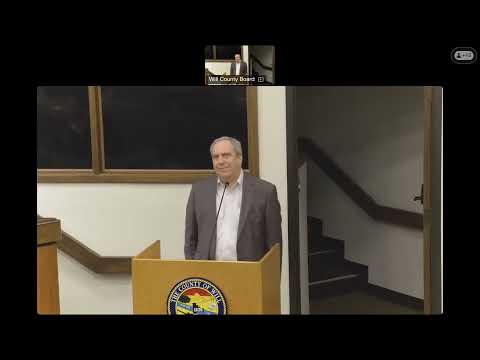
Will County launches update to Land Resource Management Plan, consultants outline yearlong process
Loading...
Summary
Will County's executive committee heard a kickoff presentation from county planners and consulting teams on updating the county's Land Resource Management Plan; consultants said the update will take about 18 months and emphasize public engagement, municipal coordination and guidance on emerging issues such as solar development and technology shifts.
Colin Duesing, Will County's long-range planner, and consultants from Tusca Associates and partners presented the formal kickoff for an update to the county's Land Resource Management Plan, which the county last revised in 2011. "We are currently starting to update it," Duesing said, noting the normal cadence for updates is about every 10 years.
Michael Blue, a vice president at Tusca Associates, told the committee the update will focus on two core elements: a policy gateway document (goals and objectives) and a forms-and-concepts handbook (the rules of the road for planning). He said the team expects the process to take about a year-and-a-half, driven by data collection, iterative review, a steering committee drawn from the land use committee and a combined program of online and in-person public engagement.
Blue described public outreach tools that will be used: an interactive website with mapped comments and a "drop-a-dot" feature to attach input to specific geographies, a series of open houses (two series of four events across the county), targeted newsletters to jurisdictions and brief polling for focused questions. He said AECOM will support market and technology forecasting so recommendations reflect regional and national development forces.
Committee members focused questions on several recurring themes. Member Balich raised solar development as an urgent matter, urging the county to consider maximum permitting and road-use fees to deter certain projects and protect farmland. "Our permitting fees are what we allow the solar companies to do," Balich said, urging the county to "charge the most we can charge them" and to consider road-use costs.
Consultants said the plan will not preclude development projects individually but will create a policy framework to guide future zoning decisions and infrastructure investments. Blue emphasized the plan's role in coordinating municipal plans, reviewing boundary agreements and convening joint meetings where municipalities and the county disagree. "We try to identify the differences and talk through those things," he said.
Members representing rural portions of the county asked that meeting locations and outreach emphasize townships and township buildings in the southern, western and eastern rural areas. One member asked whether the plan will include agricultural preservation options and funding mechanisms such as easements; the consultants said agriculture is a recognized land use and will be treated accordingly within the plan.
The consultants said their work will draw on prior transportation and infrastructure studies so the updated plan aligns land-use recommendations with transportation, stormwater and open-space goals. The committee thanked the consultants and said it welcomed a robust public engagement program and prompt follow-up to members' questions.
The committee did not take a formal policy vote on the plan itself; the presentation constituted the formal kickoff of the update process and set expectations for staff and the consulting team going forward.