Survey shows narrow, 'challenging but not impossible' path for Rescue Union bond; board hears options
Loading...
Summary
FM3 Research told the Rescue Union School District board that a November 2025 poll shows 57% initial support for a potential bond (within a 5% margin of error), with undecideds and negative messaging capable of swinging the result; trustees pressed staff on messaging, costs, ZIP-code breakdowns and whether to update the facility master plan.
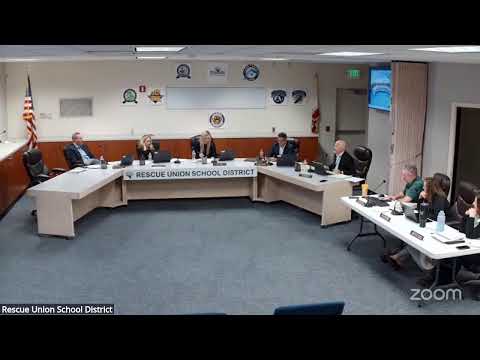
Miranda Everett, a partner at FM3 Research, presented results of a November 2025 districtwide survey to the Rescue Union School District Board of Trustees on Tuesday, telling trustees the district starts from "a challenging but not impossible path to approval" for a potential school bond.
FM3 completed 420 interviews with an approximately 5% margin of error. Everett said initial, unmodeled support for the draft ballot language was 57%, just above the state's 55% threshold for school bonds, and that 12% of respondents remained undecided. "You're starting in a place where you have support from 57%... but there's just not a lot of wiggle room," Everett said.
The polling showed sizeable majorities rate the district favorably and the quality of education as good or excellent. But only 51% said the district has 'some' or a 'great' need for additional funding absent details about the measure, leaving a communications task to explain why the district would ask voters for more money.
Price sensitivity emerged as a significant factor: 59% of respondents would back a measure that imposed an annual tax of $16 per $100,000 of assessed value, while support fell to about 50% at roughly $30 per $100,000. Everett cautioned that lowering the levy is not a guaranteed way to gain the full number of additional yes votes but is one lever to broaden support.
On messaging, FM3 found the most persuasive positive themes were basic repairs and local controlthat funds stay and are spent locallyand an explicit guarantee that each neighborhood school would receive a priority project. Repairs, local spending, safety and matching-state funds scored highest as convincing reasons to vote yes; negative messages about prior bonds or general tax opposition were the most persuasive reasons to vote no. In a modeled negative campaign scenario, modeled support dropped to about 52%, below the passage threshold.
Trustees and staff used the presentation to seek clarifications. Board members asked FM3 to check ZIP-code coding (trustees noted the Rescue ZIP is 95672 and asked why some slides referenced 95762/95672 distinctions) and requested more granular demographic and geographic cross-tabs. Everett agreed to follow up on ZIP-code assignments and small-cell counts.
Trustees pressed district staff and the superintendent on two recurring themes: how to message issues that are not visually obvious to voters (for example, aging portables that do not 'look' broken) and how much the district should plan and budget before deciding whether to place a measure on the ballot. Superintendent Shoemake and staff said the district has fixed several longstanding leaks and has been using state modernization reimbursements; they cautioned that some needs are not immediately visible and recommended using strong images and clear examples in any informational campaign.
On costs and logistics, staff said there are baseline costs to place a bond on the ballot (attorney and financial-advisor fees and county charges), and that a full informational campaign can range widely depending on whether the district hires outside consultants or relies on volunteers. Staff stated Fund 40 (a special reserve) currently has about $1,500,000 and could be tapped with board approval for preliminary expenses; staff also estimated an updated, comprehensive facility master plan would run roughly $50,000.
Several trustees noted the district's history: prior polls showed similar mid-50s support that failed at the ballot (a March election during the COVID-era environment was cited as an outlier). FM3 said second-try success is "relatively rare" but possible; their rule of thumb for swing voters was about 50/50 movement with sufficient outreach. Trustees discussed timing tradeoffs (midterm vs. presidential-year turnout), the presence of other local measures, and options for targetted outreach to swing voters.
There was no vote or action taken. Superintendent Shoemake asked trustees to complete a provided scoring matrix and said staff would follow up one-on-one and return with additional data (updated ZIP-code analyses, budget ranges for outreach, and potential updates to the facility master plan) within the coming weeks.
What happens next: staff will collect trustees' matrix responses, compile follow-up information requested tonight (cost ranges, ZIP-code clarifications, updated facility master-plan cost estimates), and return to the board for further direction; no final decision to place a measure on the ballot was made at the meeting.