
Lamar State College Orange and TJJD launch college-credit pathway for employees
Get AI-powered insights, summaries, and transcripts
Subscribe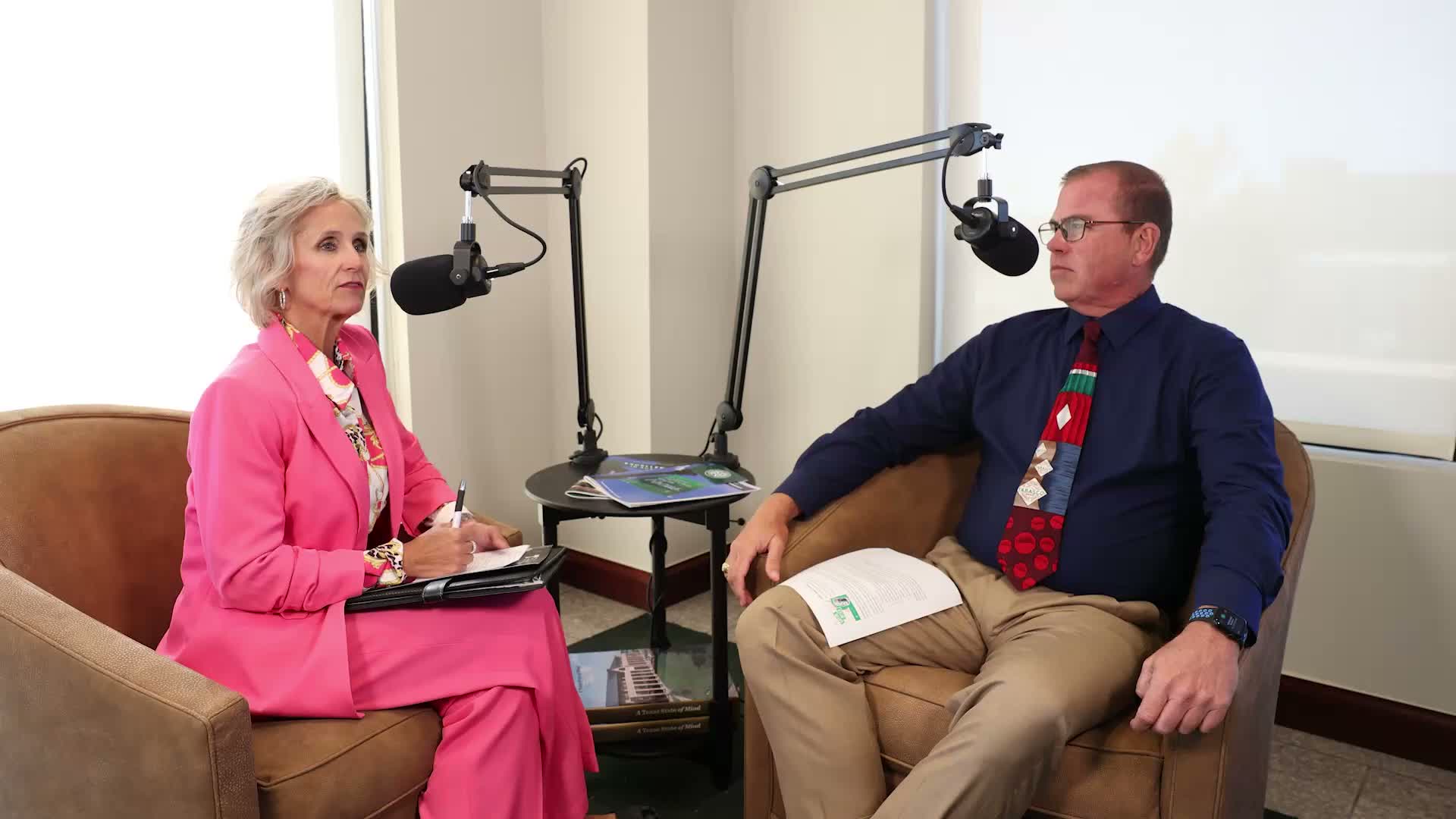
Summary
Lamar State College Orange and the Texas Juvenile Justice Department (TJJD) have signed a memorandum of understanding to let TJJD employees earn college credits—including for new-hire and annual training—with 173 employees already enrolled and plans to expand pathways to bachelor'level degrees.
Lamar State College Orange and the Texas Juvenile Justice Department (TJJD) have formalized a partnership that enables TJJD employees to earn college credits during training and stack those credits toward degrees, officials said.
Chris Ellison, director of program development and training for the TJJD, said the memorandum of understanding was signed in March 2025 and that "we already have 173 students enrolled, and that's growing every month." Ellison said the arrangement restarts an earlier credit-for-training program that had paused during COVID and was reinitiated after TJJD staff reached out to LSCO.
The partnership covers credit for new-hire training, credit for annual training and leadership academy coursework, Ellison said. Officials highlighted online course offerings that fit irregular staff schedules as a key benefit: "The ability to take those online courses" lets employees work classes around shifts, Ellison said.
Wendy Elmore, president of Lamar State College Orange, said the college can stack credits into associate of applied science degrees and has articulation arrangements within the Texas State University system and with Sam Houston State University, which she described as a strong option for continuing to a bachelor's degree. "We're very excited to have your staff ' completing the certificates with us, the associate of applied science degrees with us," Elmore said.
Ellison and Elmore said the program aims to convert what might otherwise be a job into a career, improving retention and developing future leaders within juvenile justice. Ellison said the college credits can accelerate staff who already have prior credits and help first'time college students make significant progress toward degrees.
Officials also said they hope to expand the partnership to local partners and to provide college-credit opportunities to youth in TJJD facilities for vocational coursework. As a next step, Ellison encouraged TJJD staff to contact their trainers and "Miss Bailey" to enroll and take advantage of the pathway to further education.
No funding sources, tuition arrangements or formal timelines for expansion were specified in the recorded remarks. The MOU date and current enrollment were presented as the principal, verifiable milestones.