Get Full Government Meeting Transcripts, Videos, & Alerts Forever!
Get email alerts on the Capital Improvements topic
No spam. Unsubscribe anytime.
Trustees approve OHA CIP grant framework amid debate over allowing state agencies as recipients
Summary
Board approved a capital improvement project (CIP) grant framework that would allow nonprofits and, via MOA processes, state and county agencies to be applicants or implementers; public commenters and some trustees warned of statutory and conflict‑of‑interest risks while general counsel said procurement exceptions and MOAs provide legal pathways.
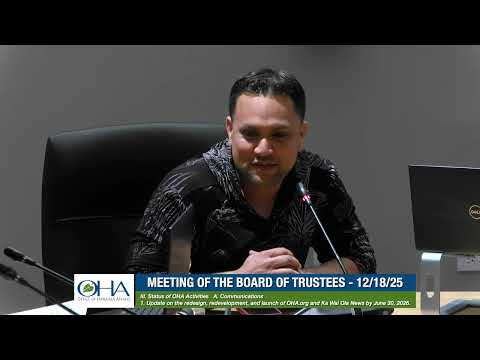
At its Dec. 18 meeting the board approved an OHA capital improvements project (CIP) grant process intended to emulate the state’s GIA/CIP approach, with a revision that permits awards to be made to nonprofits or administered through memoranda of agreement where state or county agencies hold CIP funding. The action followed a lengthy public hearing and trustee discussion about statutory authority and safeguards.
A public commenter cited Hawaii Revised Statutes chapter 10‑17 and argued that state and county agencies are not lawful recipients under that statute; general counsel responded that separate procurement and interagency funding rules allow government‑to‑government transfers under certain conditions and that an MOA framework was built into the action item to account for those differences. Trustees debated the conflict‑of‑interest risk associated with CIP allocations and the need for independent third‑party review; several trustees pushed for stronger vetting, an independent review panel and a robust procurement/oversight framework in the program design.
Supporters said the CIP program creates a transparent process for larger capital projects that can leverage co‑funding with partners and the legislature and may benefit community facilities that have struggled to secure funding. Opponents warned the board to avoid political favoritism and insisted on preemptive conflict‑of‑interest safeguards. After the exchange, the board approved the program (motion carried 6–3), directing administration and the grants team to implement independent review panels and legal oversight.