Get Full Government Meeting Transcripts, Videos, & Alerts Forever!
Get email alerts on the Housing topic
No spam. Unsubscribe anytime.
Developers and realtors press Harrison County supervisors to loosen lot mandates and allow by-right development to ease housing shortage
Summary
Industry groups told the board that large minimum lot sizes, road standards and insurance costs are key drivers of housing unaffordability; presenters urged overlay/density zoning and by-right subdivision in designated growth corridors to lower costs and increase supply.
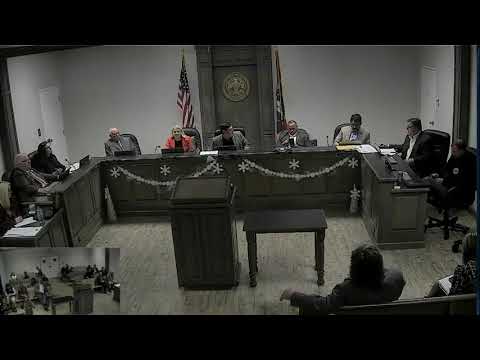
Speakers from the Gulf Coast Association of Realtors, Mississippi Home Builders Association and the Mississippi Developers Council urged the Harrison County Board of Supervisors to change zoning rules and planning processes to improve housing affordability.
Summer Newman, president of the Gulf Coast Association of Realtors, told the board "Housing affordability has reached a crisis point nationwide," and argued that county zoning decisions directly affect workers, contractors and local businesses. She said insurance costs and regulatory barriers are steering buyers toward newly built homes in areas with lower insurance premiums.
David Salters of the Mississippi Home Builders Association emphasized the economic role of single-family construction and illustrated how lot-size mandates and road-construction standards raise lot costs, which in turn multiply into substantially higher home prices. "By reducing minimum lot widths to 60 feet, many neighborhoods could be priced within the reach of real working families," Salters said.
A developer representative and the Mississippi Developers Council urged by-right subdivision in designated growth corridors, overlay districts and dwelling-per-acre rules so planning becomes predictable and less susceptible to appeals and lengthy rezoning fights. Presenters recommended creating a focused commission of residents, planners and industry representatives to update the future land-use map and set by-right density levels for G2 and G3 growth corridors.
Supervisors asked detailed questions about the math behind lot-cost multipliers and about how the proposed overlay approach would protect existing residents' tax burden; presenters responded with examples and slides and offered to help draft practical ordinance language.
Next steps: presenters asked the board to consider policy changes that would allow targeted by-right development in growth corridors and to engage a working group to update the future land-use map and overlay definitions.