Get Full Government Meeting Transcripts, Videos, & Alerts Forever!
Get email alerts on the Education College Readiness topic
No spam. Unsubscribe anytime.
Harlandale ISD highlights gains in dual-credit enrollment and college-readiness goals
Summary
District CCMR coordinator Norberto Gonzales told the board the district has increased dual-credit enrollment and made measurable gains in college-readiness indicators, citing new partnerships, weekly testing calendars and boot camps as key strategies.
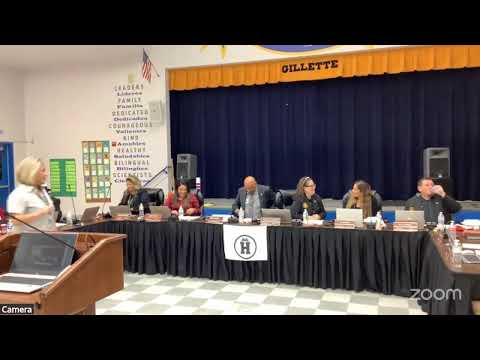
Norberto Gonzales, Harlandale ISD’s CCMR coordinator, told the Board of Trustees on Nov. 19 that the district is seeing measurable gains in dual-credit participation and college-readiness outcomes.
"The percent of students who pass one or more dual credit or dual enrollment course will increase from 31 percent to 36 percent by 2026," Gonzales said, describing Goal Progress Measure 1.2 and the district’s partnerships with institutions including Texas A and M San Antonio, UT OnRamps, Tarleton State and Alamo Colleges to expand access. He said the district currently projects about 33% for the class of 2026 and reported particular growth at McCollum High School.
Gonzales also reviewed GPM 1.3, the measure for students meeting college-ready performance in both reading and math, which the district has set to rise from 28% to 44% by 2026. He reported an eight percentage-point improvement from the class of 2024 to the class of 2025 on the combined measure and highlighted subject-level gains: "For the class of 2025, we did improve by 11 percentage points in math (43%) and 8 points in ELA (41%)," he said, acknowledging a reporting typo and clarifying the figures for trustees.
The presentation listed programmatic changes the district credits for the gains: a uniform testing calendar for TSIA2 and SAT/ACT administration during school days, targeted boot camps and weekly pullout testing from November through March, expanded OnRamps offerings, integration of Texas College Bridge into English IV, and partnerships with vendors such as Mastery Prep and Chalk Talk. Gonzales said the work includes coding courses correctly for dual-credit and adding a TAMUSA college access advisor to support all four campuses.
Trustees asked for more granular data. Several members requested row-level enrollment numbers and a breakdown showing how much of the districtwide gains come from STEM Early College High School versus traditional high schools. Gonzales agreed to provide the requested disaggregated figures after the meeting.
He also summarized revenue tied to college-success outcomes, reporting that CCMR outcomes bonus revenue rose from about $95,000 in 2023 to approximately $224,000 in 2024 (a 136% increase). Gonzales said roughly half of those funds must be used for college-related initiatives while the remainder is available for district discretion.
The board praised the Tejeda campus’s gains specifically and asked staff to publicize the successes. Gonzales closed by outlining next steps: provide campus-level row numbers, continue weekly testing through March, and expand dual-credit course options for students.