
Fairport students and staff report early benefits from state-mandated all-day phone policy; board adds executive session to agenda
Get AI-powered insights, summaries, and transcripts
Subscribe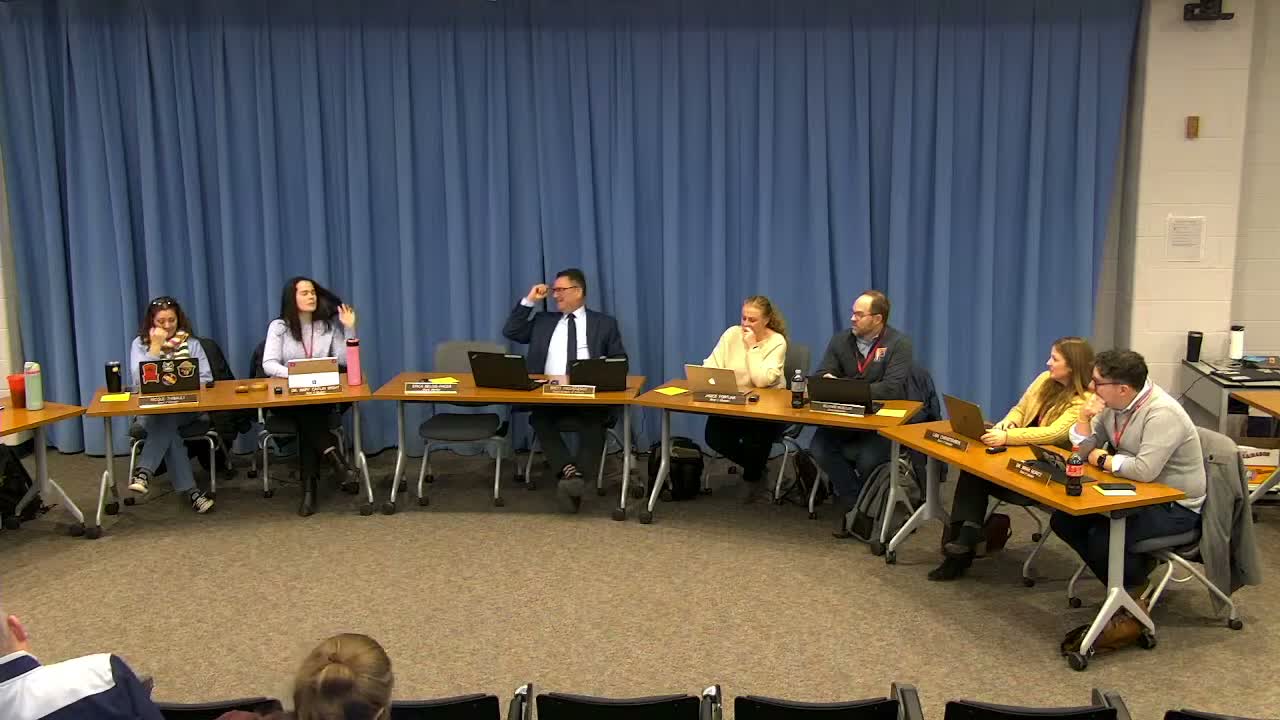
Summary
Students and administrators presented survey data saying the district's "often away" all-day cell phone policy has coincided with higher classroom engagement and more positive student interactions; the board amended the agenda to move curriculum discussion and added an executive session on bargaining and personnel.
At a Fairport Central School District board workshop, student presenters and administrators described early indications that the state's all-day "often away" cell phone law is changing classroom behavior and school routines.
Maddie Power, a student presenter, and Paige May Wilson, a senior at Fairport High School, told the board they surveyed students, teachers and administrators in grades 9—2 and focused on three areas: learning environment, student interactions, and school management. "We've seen more focus in class," Power said, summarizing teacher feedback that the district's approach has increased classroom engagement. "It's created a positive cycle of productive workdays for me," Paige said of the six-hour break from phones.
The presenters reported that roughly 80 percent of responding teachers indicated increased classroom engagement and that about 76 percent of respondents saw more positive student-to-student interactions. District administrators said the policy has changed how student management is handled; one presenter described a 100 percent "yes" response among administrators to the question of whether the policy has impacted management. Presenters and administrators cautioned the sample sizes and full demographic breakdowns were not specified in the presentation, and they said a year-over-year outcome study is not yet available.
Administrators described how the district is enforcing the policy: verbal reminders, warnings, progressive measures such as requiring repeated offenders to turn in phones each morning for a period, and contacting families when necessary. Small lockers in administrative offices are used to store confiscated phones so students can see the device is held securely.
The district shared discipline numbers concentrated in non-instructional spaces: most referrals occurred in hallways and cafeterias. Presenters cited repeat-referral counts they said were present in their data: eight repeated tenth-graders, six repeated twelfth-graders, and 25 repeated eleventh-graders. Staff noted accommodations remain in place for students with 504 or IEP plans and that monitoring smartwatches and earbuds poses enforcement challenges.
Board members and staff agreed to follow up with staff focus groups to validate survey perceptions and to track objective academic and attendance indicators (failure reports pulled at five- and ten-week intervals; CAPTURE eligibility reports) over multiple grading periods before drawing firm conclusions about academic impacts.
Before the presentation began, the board amended the evening's agenda to move the state-of-the-curriculum item to the January meeting and to add an executive session to discuss collective bargaining and employment history of individuals. The agenda amendment was seconded and approved by voice vote. After the presentation the board made and seconded a separate motion to enter the executive session; that motion passed by voice vote. The board said the public would not miss actionable items during the closed session and announced it would return for a 7 p.m. business meeting.