Lifetime Citizen Portal Access — AI Briefings, Alerts & Unlimited Follows
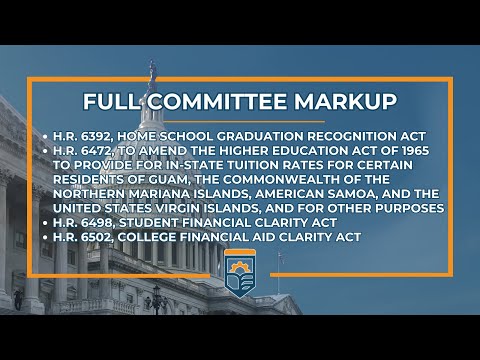
Committee approves Student Financial Clarity Act after wide debate on Department capacity and data scope
Loading...
Summary
The committee voted to report HR6498 (Student Financial Clarity Act), which reforms the college scorecard and establishes a universal net price calculator, after contentious debate over implementation capacity and several failed amendments; final recorded vote to report was 27‑6.
The House Education and Labor Committee on Thursday advanced HR6498, the Student Financial Clarity Act, a measure that would expand the Department of Education—ollege scorecard, require program‑level reporting, and create a universal net price calculator intended to help prospective students compare costs and outcomes.
Representative Bob Onder, who offered an amendment in the nature of a substitute, described the bill as a consumer protection measure that would give students more information about the cost of attendance, typical debt, and program‑level earnings. Onder said a better information environment would improve market functioning and restore confidence in postsecondary decisions.
Democratic members raised repeated concerns about whether the Department of Education currently has the staffing and resources to implement the bill. Representative Scott and others described recent layoffs at the Institute of Education Sciences and argued the bill would require additional funds and oversight to ensure reliable data collection, privacy protections, and inclusion of students who do not receive federal aid.
The committee considered a series of amendments addressing codifying gainful‑employment rules, consumer testing of tools, prohibitions on delegating secretary responsibilities, effective dates, and additional consumer explanations. Several amendments were rejected in recorded roll‑call votes (many returned 14 yeas to 19 nays). Supporters of amendments that were rejected argued for protections and testing; opponents cautioned that some proposals would add unnecessary complexity.
After debate and multiple roll‑call votes on amendments, the committee agreed to the amendment in the nature of a substitute as amended and voted to report HR6498 to the House; the clerk announced a recorded vote of 27 yeas and 6 nays. Supporters said the measure would provide clearer price and outcome data for students; critics urged adequate funding and cautioned against relying solely on earnings metrics to define program value.
The committee postponed several roll‑call votes earlier in the markup but completed the required recorded votes before reporting the bill.